



Je cadeautjes zeker op tijd in huis hebben voor de feestdagen? Kom langs in onze winkels en vind het perfecte geschenk!
- Afhalen na 1 uur in een winkel met voorraad
- Gratis thuislevering in België vanaf € 30
- Ruim aanbod met 7 miljoen producten
Je cadeautjes zeker op tijd in huis hebben voor de feestdagen? Kom langs in onze winkels en vind het perfecte geschenk!
- Afhalen na 1 uur in een winkel met voorraad
- Gratis thuislevering in België vanaf € 30
- Ruim aanbod met 7 miljoen producten





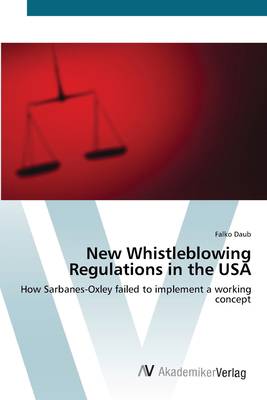
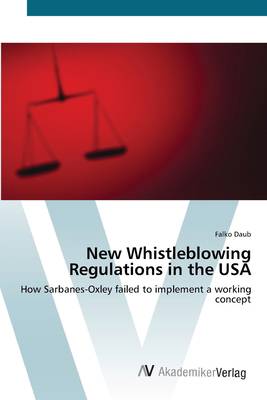
New Whistleblowing Regulations in the USA
How Sarbanes-Oxley failed to implement a working concept
Falko Daub
Paperback | Engels
€ 61,95
+ 123 punten
Omschrijving
Revision with unchanged content. The Sarbanes-Oxley Act 2002 established new regulations concerning the treat-ment of whistleblowing employees and lawyers. The main objective for these new mechanisms was to prevent further corporate scandals as recently happened in the USA. Employees and lawyers are supposed to contribute an im-portant part in terms of monitoring corporate conduct. This essay traces the reasons behind the critique of whistleblowing regulations under the Sar-banes-Oxley Act 2002. It shows that the newly adopted rules are not capable of establishing a working concept for monitoring corporations 'from the in-side'. The Sarbanes-Oxley Act does not provide sufficient protection for em-ployees who blow the whistle against retaliations by their employers. It failed to establish procedures to ensure that whistleblowing will no longer be ignored. Furtehermore, this essay shows that the current requirements for lawyers are not effective in terms of monitoring corporate conduct. Lawyers will most likely stay reluctant to disclose confidential information. The essay shows that outside reporting rules for lawyers significantly endanger the attorney-client privilege and cause considerable problems for non-US lawyers. At the bottom, the Sarbanes-Oxley Act failed to establish a working regime of the promising idea to monitor corporate conduct from the inside.
Specificaties
Betrokkenen
- Auteur(s):
- Uitgeverij:
Inhoud
- Aantal bladzijden:
- 76
- Taal:
- Engels
Eigenschappen
- Productcode (EAN):
- 9783639400991
- Verschijningsdatum:
- 20/04/2012
- Uitvoering:
- Paperback
- Formaat:
- Trade paperback (VS)
- Afmetingen:
- 152 mm x 229 mm
- Gewicht:
- 122 g


Alleen bij Standaard Boekhandel
+ 123 punten op je klantenkaart van Standaard Boekhandel
CADEAU


Beoordelingen
We publiceren alleen reviews die voldoen aan de voorwaarden voor reviews. Bekijk onze voorwaarden voor reviews.