


- Afhalen na 1 uur in een winkel met voorraad
- Gratis thuislevering in België vanaf € 30
- Ruim aanbod met 7 miljoen producten
- Afhalen na 1 uur in een winkel met voorraad
- Gratis thuislevering in België vanaf € 30
- Ruim aanbod met 7 miljoen producten





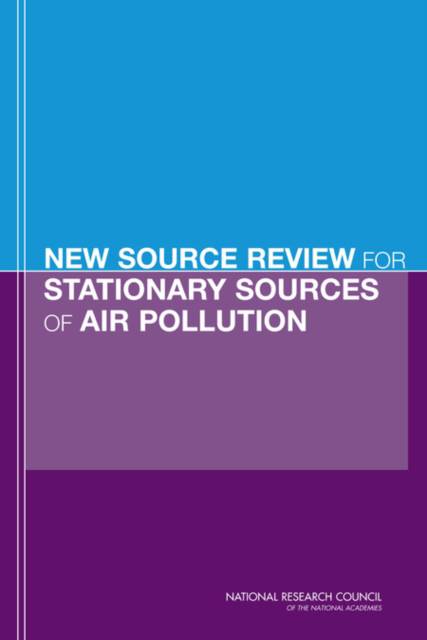
New Source Review for Stationary Sources of Air Pollution
National Research Council, Division on Earth and Life Studies, Board on Environmental Studies and Toxicology, Committee on Changes in New Source Review Programs for Stationar
Paperback | Engels
€ 130,45
Omschrijving
The Clean Air Act established a pair of programs--known as New Source Review (NSR)--that regulate large stationary sources of air pollution, such as factories and electricity-generating facilities. Congress then asked the National Research Council to estimate the effects of NSR rule changes made in 2002 and 2003 in terms of the effects on emissions and human health, and changes in operating efficiency (including energy efficiency), pollution prevention, and pollution-control activities. New Source Review for Stationary Sources of Air Pollution provides insights into the potential effects of the rule changes on national emissions from the electric power industry. Although this book focuses on the 2002 and 2003 rules, its analytic framework applies to other possible changes in NSR and to other regulatory contexts. Helpful, in that it outlines the data-collection efforts needed to assess the impact of the NSR rules, the book recommends EPA and other government agencies undertake and sustain the recommended methods.
Specificaties
Betrokkenen
- Auteur(s):
- Uitgeverij:
Inhoud
- Aantal bladzijden:
- 334
- Taal:
- Engels
Eigenschappen
- Productcode (EAN):
- 9780309102773
- Verschijningsdatum:
- 30/11/2006
- Uitvoering:
- Paperback
- Formaat:
- Trade paperback (VS)
- Afmetingen:
- 152 mm x 229 mm
- Gewicht:
- 546 g


Alleen bij Standaard Boekhandel
Cadeau

AANGERADEN


Beoordelingen
We publiceren alleen reviews die voldoen aan de voorwaarden voor reviews. Bekijk onze voorwaarden voor reviews.