


- Afhalen na 1 uur in een winkel met voorraad
- Gratis thuislevering in België vanaf € 30
- Ruim aanbod met 7 miljoen producten
- Afhalen na 1 uur in een winkel met voorraad
- Gratis thuislevering in België vanaf € 30
- Ruim aanbod met 7 miljoen producten





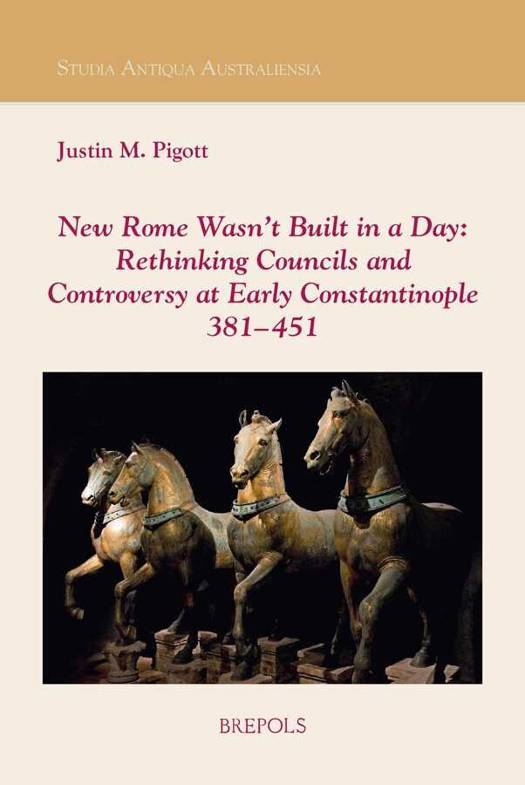
New Rome Wasn't Built in a Day
Rethinking Councils and Controversy at Early Constantinople 381-451
Justin M Pigott
€ 63,60
+ 127 punten
Omschrijving
Traditional representations of Constantinople during the period from the First Council of Constantinople (381) to the Council of Chalcedon (451) portray a see that was undergoing exponential growth in episcopal authority and increasing in its confidence to assert supremacy over the churches of the east as well as to challenge Rome's authority in the west. Central to this assessment are two canons - canon 3 of 381 and canon 28 of 451 - which have for centuries been read as confirmation of Constantinople's ecclesiastical ambition and evidence for its growth in status. However, through close consideration of the political, episcopal, theological, and demographic characteristics unique to early Constantinople, this book argues that the city's later significance as the centre of eastern Christianity and foil to Rome has served to conceal deep institutional weaknesses that severely inhibited Constantinople's early ecclesiastical development. By unpicking teleological approaches to Constantinople's early history and deconstructing narratives synonymous with the city's later Byzantine legacy, this book offers an alternative reading of this crucial seventy-year period. It demonstrates that early Constantinople's bishops not only lacked the institutional stability to lay claim to geo-ecclesiastical leadership but that canon 3 and canon 28, rather than being indicative of Constantinople's rising episcopal strength, were in fact attempts to address deeply destructive internal weaknesses that had plagued the city's early episcopal and political institutions.
Specificaties
Betrokkenen
- Auteur(s):
- Uitgeverij:
Inhoud
- Aantal bladzijden:
- 231
- Taal:
- Engels
- Reeks:
- Reeksnummer:
- nr. 9
Eigenschappen
- Productcode (EAN):
- 9782503584485
- Verschijningsdatum:
- 4/06/2020
- Uitvoering:
- Paperback
- Formaat:
- Trade paperback (VS)
- Afmetingen:
- 150 mm x 234 mm
- Gewicht:
- 385 g


Alleen bij Standaard Boekhandel
+ 127 punten op je klantenkaart van Standaard Boekhandel
Cadeau

AANGERADEN


Beoordelingen
We publiceren alleen reviews die voldoen aan de voorwaarden voor reviews. Bekijk onze voorwaarden voor reviews.