


- Afhalen na 1 uur in een winkel met voorraad
- Gratis thuislevering in België vanaf € 30
- Ruim aanbod met 7 miljoen producten
- Afhalen na 1 uur in een winkel met voorraad
- Gratis thuislevering in België vanaf € 30
- Ruim aanbod met 7 miljoen producten






€ 29,00
+ 58 punten
Uitvoering
Eenvoudig bestellen
Veilig betalen


Gratis thuislevering vanaf € 30 (via bpost)
Gratis levering in je Standaard Boekhandel
Omschrijving
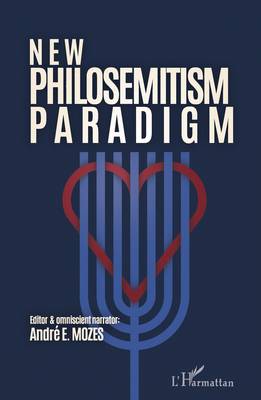
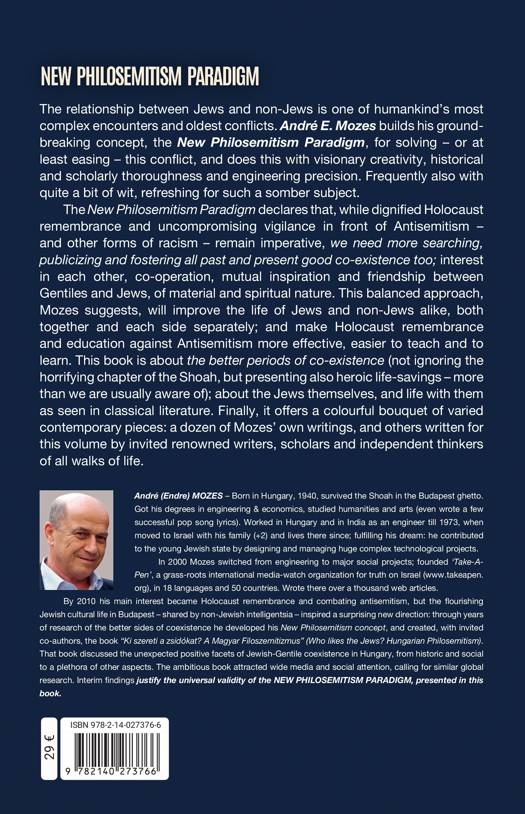
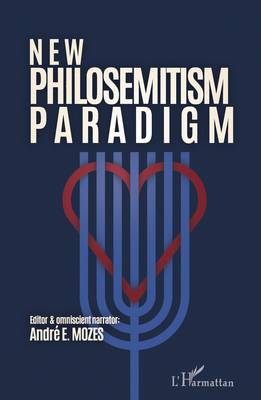
The relationship between Jews and non-Jews is one of humankind's most complex encounters and oldest conflicts. André E. Mozes builds his ground-breaking concept, the New Philosemitism Paradigm, for solving - or at least easing - this conflict, and does this with visionary creativity, historical and scholarly thoroughness and engineering precision. Frequently also with quite a bit of wit, refreshing for such a somber subject. The New Philosemitism Paradigm declares that, while dignified Holocaust remembrance and uncompromising vigilance in front of Antisemitism - and other forms of racism - remain imperative, we need more searching, publicizing and fostering all past and present good co-existence too; interest in each other, co-operation, mutual inspiration and friendship between Gentiles and Jews, of material and spiritual nature. This balanced approach, Mozes suggests, will improve the life of Jews and non-Jews alike, both together and each side separately; and make Holocaust remembrance and education against Antisemitism more effective, easier to teach and to learn. This book is about the better periods of co-existence (not ignoring the horrifying chapter of the Shoah, but presenting also heroic life-savings - more than we are usually aware of); about the Jews themselves, and life with them as seen in classical literature. Finally, it offers a colourful bouquet of varied contemporary pieces: a dozen of Mozes' own writings, and others written for this volume by invited renowned writers, scholars and independent thinkers of all walks of life.
Specificaties
Betrokkenen
- Auteur(s):
- Uitgeverij:
Inhoud
- Aantal bladzijden:
- 446
- Taal:
- Engels
- Reeks:
- Geïllustreerd:
- Ja
Eigenschappen
- Productcode (EAN):
- 9782140273766
- Verschijningsdatum:
- 31/10/2023
- Uitvoering:
- Paperback
- Formaat:
- Trade paperback (VS)
- Afmetingen:
- 153 mm x 235 mm
- Gewicht:
- 612 g


Alleen bij Standaard Boekhandel
+ 58 punten op je klantenkaart van Standaard Boekhandel
CADEAU

AANGERADEN


Beoordelingen
We publiceren alleen reviews die voldoen aan de voorwaarden voor reviews. Bekijk onze voorwaarden voor reviews.