


- Afhalen na 1 uur in een winkel met voorraad
- Gratis thuislevering in België vanaf € 30
- Ruim aanbod met 7 miljoen producten
- Afhalen na 1 uur in een winkel met voorraad
- Gratis thuislevering in België vanaf € 30
- Ruim aanbod met 7 miljoen producten





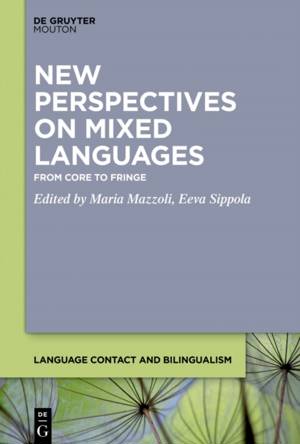
New Perspectives on Mixed Languages
From Core to Fringe
€ 43,45
+ 86 punten
Omschrijving
A growing number of language varieties with diverse backgrounds and structural typologies have been identified as mixed. However, the debate on the status of many varieties and even on the existence of the category of "mixed languages" continues still today.
This volume examines the current state of the theoretical and empirical debate on mixed languages and presents new advances from a diverse set of mixed language varieties. These cover well-known mixed languages, such as Media Lengua, Michif, Gurindji Kriol, and Kallawaya, and varieties whose classification is still debated, such as Reo Rapa, Kumzari, Jopará, and Wutun. The contributions deal with different aspects of mixed languages, including descriptive approaches to their current status and origins, theoretical discussions on the language contact processes in them, and analysis of different types of language mixing practices.
This book contributes to the current debate on the existence of the mixed language category, shedding more light onto this fascinating group of languages and the contact processes that shape them.
This volume examines the current state of the theoretical and empirical debate on mixed languages and presents new advances from a diverse set of mixed language varieties. These cover well-known mixed languages, such as Media Lengua, Michif, Gurindji Kriol, and Kallawaya, and varieties whose classification is still debated, such as Reo Rapa, Kumzari, Jopará, and Wutun. The contributions deal with different aspects of mixed languages, including descriptive approaches to their current status and origins, theoretical discussions on the language contact processes in them, and analysis of different types of language mixing practices.
This book contributes to the current debate on the existence of the mixed language category, shedding more light onto this fascinating group of languages and the contact processes that shape them.
Specificaties
Betrokkenen
- Uitgeverij:
Inhoud
- Aantal bladzijden:
- 416
- Taal:
- Engels
- Reeks:
- Reeksnummer:
- nr. 18
Eigenschappen
- Productcode (EAN):
- 9781501520945
- Verschijningsdatum:
- 19/12/2022
- Uitvoering:
- Paperback
- Formaat:
- Trade paperback (VS)
- Afmetingen:
- 156 mm x 234 mm
- Gewicht:
- 580 g

Alleen bij Standaard Boekhandel
+ 86 punten op je klantenkaart van Standaard Boekhandel
Cadeau

AANGERADEN


Beoordelingen
We publiceren alleen reviews die voldoen aan de voorwaarden voor reviews. Bekijk onze voorwaarden voor reviews.