


- Afhalen na 1 uur in een winkel met voorraad
- Gratis thuislevering in België vanaf € 30
- Ruim aanbod met 7 miljoen producten
- Afhalen na 1 uur in een winkel met voorraad
- Gratis thuislevering in België vanaf € 30
- Ruim aanbod met 7 miljoen producten





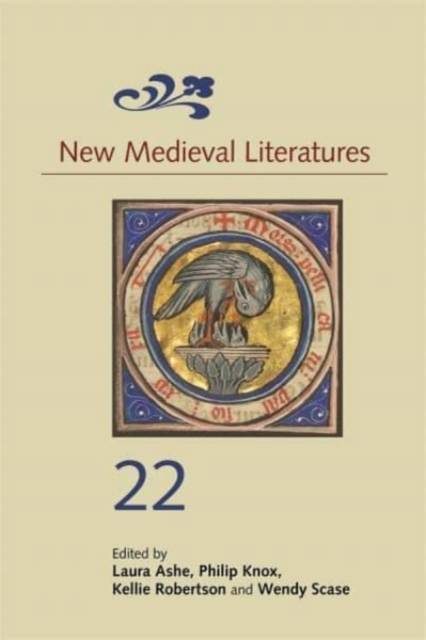
New Medieval Literatures 22
€ 209,45
+ 418 punten
Omschrijving
New Medieval Literatures is an annual of work on medieval textual cultures, aiming to engage with intellectual and cultural pluralism in the Middle Ages and now. Its scope is inclusive of work across the theoretical, archival, philological, and historicist methodologies associated with medieval literary studies, and embraces the range of European cultures, capaciously defined.
Essays in this volume engage with widely varied themes, from confession in the domestic household to international politics and statecraft; experimental scientific knowledge, and the supernatural world of demons; canonical Arthurian romance, and scholastic theology in the vernacular; monastic historiographical visions, and geographies of pilgrimage. Investigations range from the twelfth to the fifteenth centuries, and from England to the Holy Land. Chrétien de Troyes's Le chevalier de la charrette and Geoffrey Chaucer's Friar's Tale are examined in new ways, and with new conclusions for their engagements with technologies of embodiment and the hermeneutics of bodily contact; Laȝamon's Brut is shown to bring the expectations of monastic historiography into the vernacular, while Reginald Pecock's radical and sophisticated vernacular theology is explicated in all its dangerous heterodoxy. Multiple narratives converge and are occluded at the Cave of the Patriarchs in Hebron; Albert the Great experiments with animals and reorients humans in the natural world; Alain Chartier strives to build a united French state. Finally, domestic, familial, and civic bonds of obligation emerge in the shared textual communities of anonymous, late-medieval confessional forms.
CONTRIBUTORS: ROBYN A. BARTLETT, KANTIK GHOSH, AYLIN MALCOLM, ALASTAIR MINNIS, LUKE SUNDERLAND, JAMIE K. TAYLOR, HANNAH WEAVER, LUCAS WOOD.
Essays in this volume engage with widely varied themes, from confession in the domestic household to international politics and statecraft; experimental scientific knowledge, and the supernatural world of demons; canonical Arthurian romance, and scholastic theology in the vernacular; monastic historiographical visions, and geographies of pilgrimage. Investigations range from the twelfth to the fifteenth centuries, and from England to the Holy Land. Chrétien de Troyes's Le chevalier de la charrette and Geoffrey Chaucer's Friar's Tale are examined in new ways, and with new conclusions for their engagements with technologies of embodiment and the hermeneutics of bodily contact; Laȝamon's Brut is shown to bring the expectations of monastic historiography into the vernacular, while Reginald Pecock's radical and sophisticated vernacular theology is explicated in all its dangerous heterodoxy. Multiple narratives converge and are occluded at the Cave of the Patriarchs in Hebron; Albert the Great experiments with animals and reorients humans in the natural world; Alain Chartier strives to build a united French state. Finally, domestic, familial, and civic bonds of obligation emerge in the shared textual communities of anonymous, late-medieval confessional forms.
CONTRIBUTORS: ROBYN A. BARTLETT, KANTIK GHOSH, AYLIN MALCOLM, ALASTAIR MINNIS, LUKE SUNDERLAND, JAMIE K. TAYLOR, HANNAH WEAVER, LUCAS WOOD.
Specificaties
Betrokkenen
- Uitgeverij:
Inhoud
- Aantal bladzijden:
- 310
- Taal:
- Engels
- Reeks:
- Reeksnummer:
- nr. 22
Eigenschappen
- Productcode (EAN):
- 9781843846239
- Verschijningsdatum:
- 11/03/2022
- Uitvoering:
- Hardcover
- Formaat:
- Genaaid
- Afmetingen:
- 137 mm x 218 mm
- Gewicht:
- 453 g

Alleen bij Standaard Boekhandel
+ 418 punten op je klantenkaart van Standaard Boekhandel
Cadeau

AANGERADEN


Beoordelingen
We publiceren alleen reviews die voldoen aan de voorwaarden voor reviews. Bekijk onze voorwaarden voor reviews.