


- Afhalen na 1 uur in een winkel met voorraad
- Gratis thuislevering in België vanaf € 30
- Ruim aanbod met 7 miljoen producten
- Afhalen na 1 uur in een winkel met voorraad
- Gratis thuislevering in België vanaf € 30
- Ruim aanbod met 7 miljoen producten





€ 28,45
+ 56 punten
Omschrijving
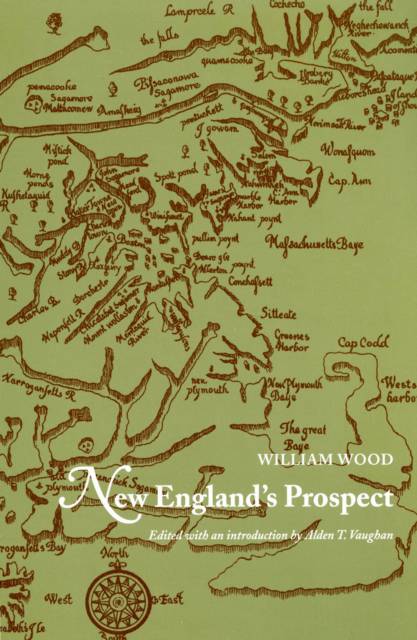
New England's Prospect is one of the most important and enduring primary sources for the early history of New England. Originally written by William Wood--an Englishman who spent approximately four years in New England between 1629 and 1633--the work was first published in London in 1634.
The book is divided into two main parts. The first part offers a remarkably detailed account of New England's natural environment, including its geography, climate, soils, and an extensive catalogue of its flora and fauna. Wood describes trees, plants, birds, fish, and wildlife with both scientific curiosity and practical purpose, conveying the abundance and promise of the land to English readers contemplating emigration. He also surveys the emerging English colonial settlements of the region. The second part turns to the Indigenous peoples of New England--principally the Algonquian-speaking tribes such as the Massachusetts, Narragansett, and their neighbors--offering descriptions of their society, customs, government, warfare, diet, dress, and language. This section remains one of the earliest and most detailed ethnographic accounts of Native peoples in the northeast, and is an invaluable resource for historians, anthropologists, and students of Indigenous studies.
Alden T. Vaughan's editorial introduction situates Wood and his work within the broader context of 17th-century colonial promotion literature, addresses the somewhat mysterious biography of Wood himself (whose precise identity has remained a matter of scholarly debate), and assesses the historical reliability and significance of the text. Vaughan also provides annotations that make the original 17th-century prose accessible to modern readers.
Specificaties
Betrokkenen
- Auteur(s):
- Uitgeverij:
Inhoud
- Aantal bladzijden:
- 144
- Taal:
- Engels
- Reeks:
Eigenschappen
- Productcode (EAN):
- 9780870238901
- Verschijningsdatum:
- 26/08/1993
- Uitvoering:
- Paperback
- Formaat:
- Trade paperback (VS)
- Afmetingen:
- 152 mm x 227 mm
- Gewicht:
- 258 g



Alleen bij Standaard Boekhandel
+ 56 punten op je klantenkaart van Standaard Boekhandel
Cadeau

AANGERADEN


Beoordelingen
We publiceren alleen reviews die voldoen aan de voorwaarden voor reviews. Bekijk onze voorwaarden voor reviews.