


- Afhalen na 1 uur in een winkel met voorraad
- Gratis thuislevering in België vanaf € 30
- Ruim aanbod met 7 miljoen producten
- Afhalen na 1 uur in een winkel met voorraad
- Gratis thuislevering in België vanaf € 30
- Ruim aanbod met 7 miljoen producten





€ 239,45
+ 478 punten
Uitvoering
Omschrijving
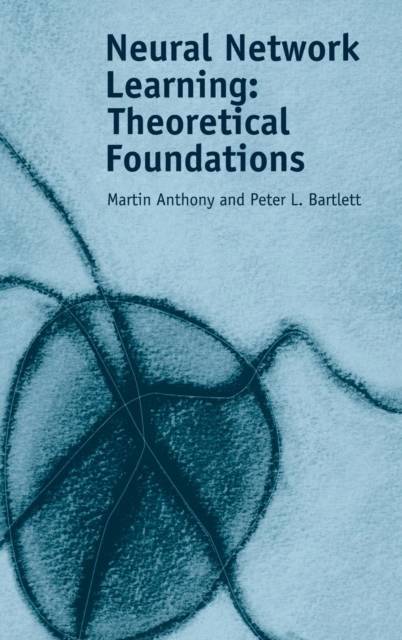
This important work describes recent theoretical advances in the study of artificial neural networks. It explores probabilistic models of supervised learning problems, and addresses the key statistical and computational questions. Chapters survey research on pattern classification with binary-output networks, including a discussion of the relevance of the Vapnik Chervonenkis dimension, and of estimates of the dimension for several neural network models. In addition, Anthony and Bartlett develop a model of classification by real-output networks, and demonstrate the usefulness of classification with a "large margin." The authors explain the role of scale-sensitive versions of the Vapnik Chervonenkis dimension in large margin classification, and in real prediction. Key chapters also discuss the computational complexity of neural network learning, describing a variety of hardness results, and outlining two efficient, constructive learning algorithms. The book is self-contained and accessible to researchers and graduate students in computer science, engineering, and mathematics.
Specificaties
Betrokkenen
- Auteur(s):
- Uitgeverij:
Inhoud
- Aantal bladzijden:
- 404
- Taal:
- Engels
Eigenschappen
- Productcode (EAN):
- 9780521573535
- Verschijningsdatum:
- 4/11/1999
- Uitvoering:
- Hardcover
- Formaat:
- Genaaid
- Afmetingen:
- 158 mm x 234 mm
- Gewicht:
- 635 g


Alleen bij Standaard Boekhandel
+ 478 punten op je klantenkaart van Standaard Boekhandel
Cadeau

AANGERADEN


Beoordelingen
We publiceren alleen reviews die voldoen aan de voorwaarden voor reviews. Bekijk onze voorwaarden voor reviews.