


- Afhalen na 1 uur in een winkel met voorraad
- Gratis thuislevering in België vanaf € 30
- Ruim aanbod met 7 miljoen producten
- Afhalen na 1 uur in een winkel met voorraad
- Gratis thuislevering in België vanaf € 30
- Ruim aanbod met 7 miljoen producten





€ 43,00
+ 86 punten
Eenvoudig bestellen
Veilig betalen


Gratis thuislevering vanaf € 30 (via bpost)
Gratis levering in je Standaard Boekhandel
Omschrijving
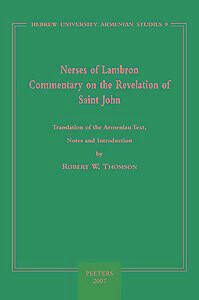
Nerses of Lambron (1153-1198) is one of the most significant figures in Armenian literature and ecclesiastical history. As author of numerous biblical commentaries and translator of legal and other texts he is noted as a prolific scholar, and as Archbishop of Tarsus he played a major role in the religious life of Cilician Armenia. In 1179 he made a new translation of the Book of Revelation, not unknown earlier in Armenia but not yet integrated into the Armenian canon of scripture. In the same year he adapted the Greek Commentary on Revelation by Andreas of Caesarea with appropriate additions and changes to reflect Armenian tradition. In this first translation of the Armenian text (based on the 1855 edition with a comparison of the copy made in 1284 by the noted Esayi Nc'ec'i), R.W. Thomson emphasizes the differences between Nerses' adaptation and the original Greek, and places this reworking in the context of the Armenian-Byzantine discussions on possible reunion of the churches. In the Introduction he studies the use of the Book of Revelation in Armenia prior to Nerses, reviews Nerses' career, and highlights the theological characteristics of the adaptation.
Specificaties
Betrokkenen
- Auteur(s):
- Uitgeverij:
Inhoud
- Aantal bladzijden:
- 225
- Taal:
- Engels
- Reeks:
- Reeksnummer:
- nr. 9
Eigenschappen
- Productcode (EAN):
- 9789042918665
- Verschijningsdatum:
- 16/04/2007
- Uitvoering:
- Paperback
- Formaat:
- Trade paperback (VS)
- Afmetingen:
- 163 mm x 239 mm
- Gewicht:
- 394 g


Alleen bij Standaard Boekhandel
+ 86 punten op je klantenkaart van Standaard Boekhandel
CADEAU

AANGERADEN


Beoordelingen
We publiceren alleen reviews die voldoen aan de voorwaarden voor reviews. Bekijk onze voorwaarden voor reviews.