


- Afhalen na 1 uur in een winkel met voorraad
- Gratis thuislevering in België vanaf € 30
- Ruim aanbod met 7 miljoen producten
- Afhalen na 1 uur in een winkel met voorraad
- Gratis thuislevering in België vanaf € 30
- Ruim aanbod met 7 miljoen producten





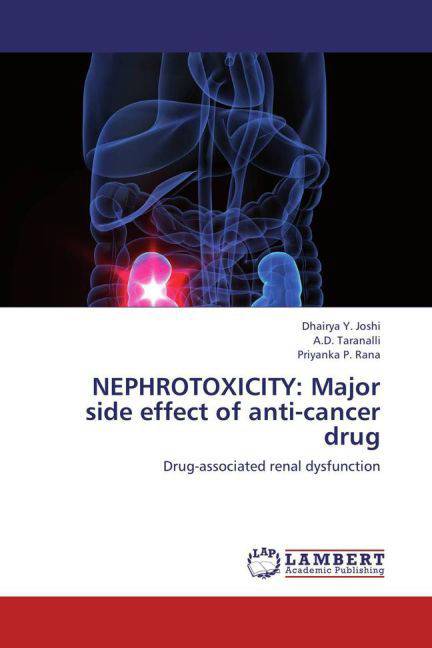
NEPHROTOXICITY: Major side effect of anti-cancer drug
Drug-associated renal dysfunction
Dhairya Y. Joshi, A. D. Taranalli, Priyanka P. Rana
Paperback | Engels
€ 35,45
+ 70 punten
Omschrijving
Cisplatin (CDDP) is a major antineoplastic drug for the treatment of solid tumors such as metastatic bladder, testicular, and ovarian carcinomas. The drug can cause much toxicity, but the chief dose-limiting one is nephrotoxicity. Several, often interrelated mechanisms of actions have been hypothesized to induce the nephrotoxicity. These include apoptosis and inflammatory mechanism, production of tumor necrosis factor (TNF)- by renal parenchymal cells, and generation of reactive oxygen species (ROS) that include superoxide dismutase, hydrogen radical, hydrogen peroxide, singlet oxygen, and nitric oxide. These techniques have proved to be only partially successful as acute renal failure occurs even at such low doses and especially after its repeated administration. The nephrotoxicity of cisplatin has been recognized since its introduction over 25 years ago. Early clinical use of cisplatin saw dose-related cisplatin-induced acute renal failure in 14 to 100% of patients, with the incidence varying with the cumulative dose. Clinical data have shown that approximately one third of patients experience kidney injury in days after cisplatin treatment, with reduced glomerular filtration.
Specificaties
Betrokkenen
- Auteur(s):
- Uitgeverij:
Inhoud
- Aantal bladzijden:
- 64
- Taal:
- Engels
Eigenschappen
- Productcode (EAN):
- 9783659384325
- Verschijningsdatum:
- 25/04/2013
- Uitvoering:
- Paperback
- Afmetingen:
- 150 mm x 220 mm
- Gewicht:
- 104 g


Alleen bij Standaard Boekhandel
+ 70 punten op je klantenkaart van Standaard Boekhandel
Cadeau

AANGERADEN


Beoordelingen
We publiceren alleen reviews die voldoen aan de voorwaarden voor reviews. Bekijk onze voorwaarden voor reviews.