


- Afhalen na 1 uur in een winkel met voorraad
- Gratis thuislevering in België vanaf € 30
- Ruim aanbod met 7 miljoen producten
- Afhalen na 1 uur in een winkel met voorraad
- Gratis thuislevering in België vanaf € 30
- Ruim aanbod met 7 miljoen producten





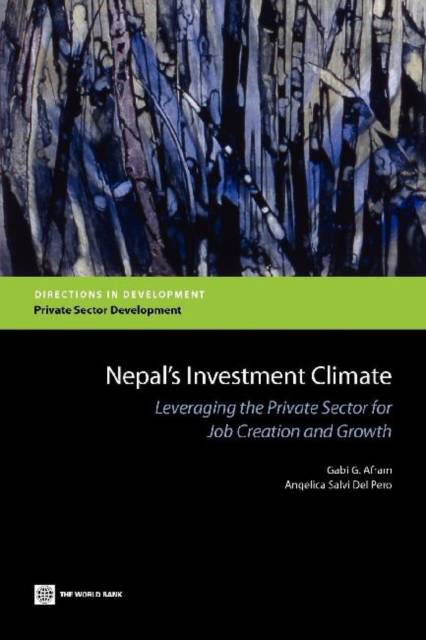
Nepal's Investment Climate
Leveraging the Private Sector for Job Creation and Growth
Gabi G Afram, Angelica Salvi Del Pero
€ 50,95
+ 101 punten
Omschrijving
The signing of the Comprehensive Peace Agreement in 2006 and Constituent Assembly elections in 2008 have paved the way for political and economic reform in Nepal. Indeed, the 2009 Investment Climate Assessment (ICA) shows that Nepal's private sector is starting to reap some dividend from the cessation of armed conflict in terms of employment generation, rebounding tourism, increased tax collection, as well as less complex business regulations and procedures to obtain permits.However, Nepal's private sector (already plagued with various market failures) continues to suffer from the consequences of a decade of armed conflict and civil unrest. Poor infrastructure, particularly for transportation and energy, inadequate labor skills and continuous labor unrest, as well as inefficient and unstable credit markets, exacerbate the damage that continued political instability has had on the investment climate. Together political instability and poor infrastructure pose the two greatest challenges to Nepal's investment climate and growth in the private sector. The effects of these challenges on business confidence and economic performance are visible and costly: productions costs are high, business operations and trade are often disrupted, and competitiveness is declining.
Specificaties
Betrokkenen
- Auteur(s):
- Uitgeverij:
Inhoud
- Aantal bladzijden:
- 268
- Taal:
- Engels
- Reeks:
Eigenschappen
- Productcode (EAN):
- 9780821394656
- Verschijningsdatum:
- 1/04/2012
- Uitvoering:
- Paperback
- Formaat:
- Trade paperback (VS)
- Afmetingen:
- 152 mm x 229 mm
- Gewicht:
- 362 g



Alleen bij Standaard Boekhandel
+ 101 punten op je klantenkaart van Standaard Boekhandel
Cadeau

AANGERADEN


Beoordelingen
We publiceren alleen reviews die voldoen aan de voorwaarden voor reviews. Bekijk onze voorwaarden voor reviews.