


- Afhalen na 1 uur in een winkel met voorraad
- Gratis thuislevering in België vanaf € 30
- Ruim aanbod met 7 miljoen producten
- Afhalen na 1 uur in een winkel met voorraad
- Gratis thuislevering in België vanaf € 30
- Ruim aanbod met 7 miljoen producten





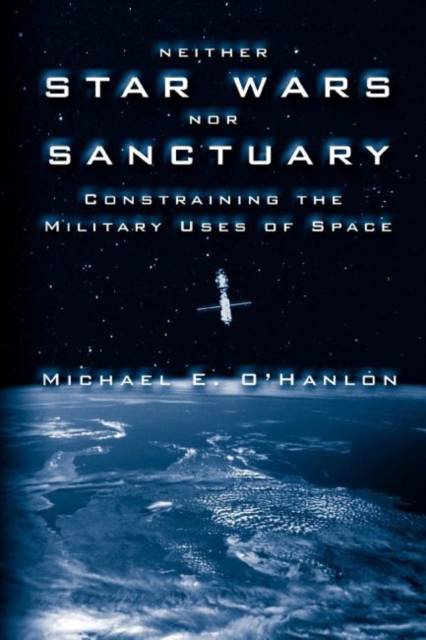
Neither Star Wars Nor Sanctuary
Constraining the Military Uses of Space
Michael E O'Hanlon
Paperback | Engels
€ 44,45
+ 88 punten
Uitvoering
Omschrijving
Space has been militarized for over four decades. Should it now be weaponized? This incisive and insightful book argues that it should not. Since the cold war, space has come to harbor many tools of the tactical warfighter. Satellites have long been used to provide strategic communication, early warning of missile launch, and arms control verification. The U.S. armed forces increasingly use space assets to locate and strike targets on the battlefield. To date, though, no country deploys destructive weapons in space, for use against space or Earth targets, and no country possesses ground-based weapons designed explicitly to damage objects in space. The line between nonweaponization and weaponization is blurry, to be sure--but it has not yet been crossed. In Ne ither Star Wars nor Sanctuary, Michael E. O'Hanlon makes a forceful case for keeping it this way. The United States, with military space budgets of around $20 billion a year, enjoys a remarkably favorable military advantage in space. Pursuing a policy of space weaponization solely in order to maximize its own military capabilities would needlessly jeopardize this situation by likely hastening development of space weapons in numerous countries. It would also reaffirm the prevalent international image of the United States as a global cowboy of sorts, too quick to reach for the gun. O'Hanlon therefore asserts that U.S. military space policy should focus on delaying any movement toward weaponization, without foreclosing the option of developing space weapons in the future, if necessary. Extreme positions that would either hasten to weaponize space or permanently rule this out are not consistent with technological realities and U.S. security interests.
Specificaties
Betrokkenen
- Auteur(s):
- Uitgeverij:
Inhoud
- Aantal bladzijden:
- 173
- Taal:
- Engels
Eigenschappen
- Productcode (EAN):
- 9780815764571
- Verschijningsdatum:
- 23/04/2004
- Uitvoering:
- Paperback
- Formaat:
- Trade paperback (VS)
- Afmetingen:
- 155 mm x 228 mm
- Gewicht:
- 272 g



Alleen bij Standaard Boekhandel
+ 88 punten op je klantenkaart van Standaard Boekhandel
AANGERADEN


Beoordelingen
We publiceren alleen reviews die voldoen aan de voorwaarden voor reviews. Bekijk onze voorwaarden voor reviews.