


- Afhalen na 1 uur in een winkel met voorraad
- Gratis thuislevering in België vanaf € 30
- Ruim aanbod met 7 miljoen producten
- Afhalen na 1 uur in een winkel met voorraad
- Gratis thuislevering in België vanaf € 30
- Ruim aanbod met 7 miljoen producten





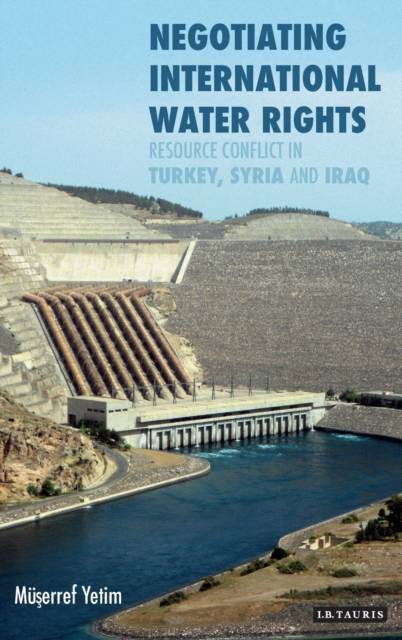
Negotiating International Water Rights
Natural Resource Conflict in Turkey, Syria and Iraq
Muserref Yetim
€ 296,95
+ 593 punten
Omschrijving
Transboundary watercourses account for an estimated 60 per cent of global freshwater flow and support the livelihoods of hundreds of millions of people worldwide. Yet the indeterminate status of water rights in many international watercourses presents a problem and many attempts to resolve water rights issue have failed. Knowing how and where negotiations fail is essential if successful resolution is to be achieved. Muserref Yetim's important book seeks to illustrate a means to the peaceful resolution of natural resource based conflicts. Through a detailed study of the Tigris-Euphrates water conflict, involving Turkey, Syria and Iraq, countries of vital security interest to the world at large, the author clarifies the collective action dilemmas confronting Middle Eastern watercourses and reveals the bargaining bottlenecks where negotiations fail. She develops an original framework that explains bargaining failures and proposes conditions for creating a new property rights regime among watercourse states that offers a route to governing their shared water resources in ways that are politically, economically and environmentally sound. In almost all water scarce regions, international water resources are subject to intense unilateral exploitation in a highly competitive fashion. And as demand for freshwater continues to increase, through increasing urbanization and the continuing development of societies, so the issue of how such shared water resources can best be governed is becoming vitally important. Negotiating International Water Rights offers both a timely contribution to a matter of international concern and important insights into resource conflict in countries of vital security interest to the world at large.
Specificaties
Betrokkenen
- Auteur(s):
- Uitgeverij:
Inhoud
- Aantal bladzijden:
- 256
- Taal:
- Engels
- Reeks:
Eigenschappen
- Productcode (EAN):
- 9781784535520
- Verschijningsdatum:
- 28/06/2016
- Uitvoering:
- Hardcover
- Formaat:
- Genaaid
- Afmetingen:
- 157 mm x 236 mm
- Gewicht:
- 566 g


Alleen bij Standaard Boekhandel
+ 593 punten op je klantenkaart van Standaard Boekhandel
Cadeau

AANGERADEN


Beoordelingen
We publiceren alleen reviews die voldoen aan de voorwaarden voor reviews. Bekijk onze voorwaarden voor reviews.