


- Afhalen na 1 uur in een winkel met voorraad
- Gratis thuislevering in België vanaf € 30
- Ruim aanbod met 7 miljoen producten
- Afhalen na 1 uur in een winkel met voorraad
- Gratis thuislevering in België vanaf € 30
- Ruim aanbod met 7 miljoen producten





€ 48,45
+ 96 punten
Omschrijving
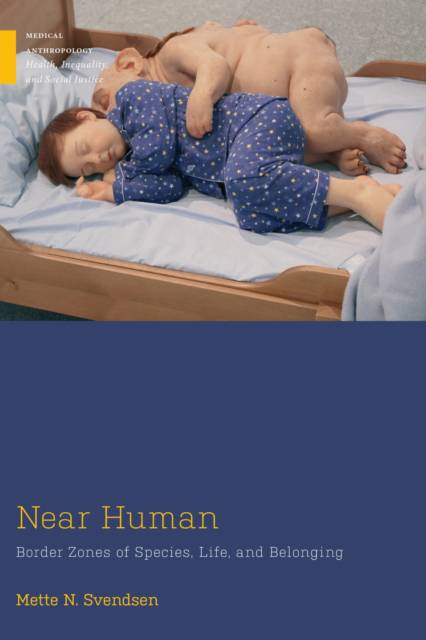
Near Human takes us into the borders of human and animal life. In the animal facility, fragile piglets substitute for humans who cannot be experimented on. In the neonatal intensive care unit, extremely premature infants prompt questions about whether they are too fragile to save or, if they survive, whether they will face a life of severe disability. Drawing on ethnographic fieldwork carried out on farms, in animal-based experimental science labs, and in hospitals, Mette N. Svendsen shows that practices of substitution redirect the question of "what it means" to be human to "what it takes" to be human. The near humanness of preterm infants and research piglets becomes an avenue to unravel how neonatal life is imagined, how societal belonging is evaluated, and how the Danish welfare state is forged. This courageous multi-sited and multi-species approach cracks open the complex ethical field of valuating life and making different kinds of pigs and different kinds of humans belong in Denmark.
Specificaties
Betrokkenen
- Auteur(s):
- Uitgeverij:
Inhoud
- Aantal bladzijden:
- 230
- Taal:
- Engels
- Reeks:
Eigenschappen
- Productcode (EAN):
- 9781978818217
- Verschijningsdatum:
- 12/11/2021
- Uitvoering:
- Paperback
- Formaat:
- Trade paperback (VS)
- Afmetingen:
- 152 mm x 226 mm
- Gewicht:
- 358 g


Alleen bij Standaard Boekhandel
+ 96 punten op je klantenkaart van Standaard Boekhandel
Cadeau

AANGERADEN


Beoordelingen
We publiceren alleen reviews die voldoen aan de voorwaarden voor reviews. Bekijk onze voorwaarden voor reviews.