


- Afhalen na 1 uur in een winkel met voorraad
- Gratis thuislevering in België vanaf € 30
- Ruim aanbod met 7 miljoen producten
- Afhalen na 1 uur in een winkel met voorraad
- Gratis thuislevering in België vanaf € 30
- Ruim aanbod met 7 miljoen producten





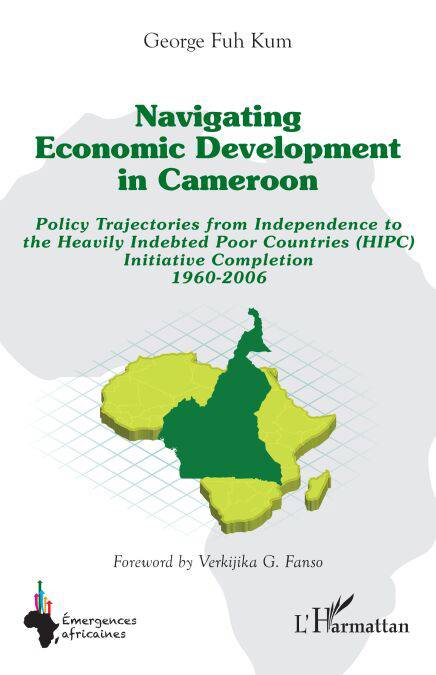
Navigating economic development in Cameroon E-BOOK
Policy Trajectories from Independence to the Heavily Indebted Poor Countries (HIPC) Initiative Completion 1960-2006
George Fuh Kum
E-book | Engels
€ 20,99
+ 20 punten
Uitvoering
Omschrijving
This book is an analytical compendium of Cameroon’s economic development policies, from 1960 to 2006. It opens with the country’s colonial economic experiences and proceeds with an analysis of its initial economic development guidelines in the early 1960s, fundamentally based on development planning and planned liberalism, executed through Five Years Development Plans.
Cameroon’s early development emphasis was on industrialisation, later deduced to be too costly and slow in spurring growth. Agriculture was thus endorsed in the early 1970s, as a primary strategy to boost real development in the country. It was in this backdrop that precepts like the green revolution, self-reliance development, food self-sufficiency and others were adopted.
The book rounds off with the different measures implemented by the Cameroon government, Bretton Woods institutions and others, to restore and sustain the country’s economy during and after the economic crisis. It argues that while the principles underlying Cameroon’s economic development were resilient, they fell short of expected outcomes.
Cameroon’s early development emphasis was on industrialisation, later deduced to be too costly and slow in spurring growth. Agriculture was thus endorsed in the early 1970s, as a primary strategy to boost real development in the country. It was in this backdrop that precepts like the green revolution, self-reliance development, food self-sufficiency and others were adopted.
The book rounds off with the different measures implemented by the Cameroon government, Bretton Woods institutions and others, to restore and sustain the country’s economy during and after the economic crisis. It argues that while the principles underlying Cameroon’s economic development were resilient, they fell short of expected outcomes.
Specificaties
Betrokkenen
- Auteur(s):
- Uitgeverij:
Inhoud
- Aantal bladzijden:
- 250
- Taal:
- Engels
Eigenschappen
- Productcode (EAN):
- 9782336505398
- Verschijningsdatum:
- 18/12/2024
- Uitvoering:
- E-book
- Beveiligd met:
- Digital watermarking
- Formaat:


Alleen bij Standaard Boekhandel
+ 20 punten op je klantenkaart van Standaard Boekhandel
Cadeau

AANGERADEN


Beoordelingen
We publiceren alleen reviews die voldoen aan de voorwaarden voor reviews. Bekijk onze voorwaarden voor reviews.