


- Afhalen na 1 uur in een winkel met voorraad
- Gratis thuislevering in België vanaf € 30
- Ruim aanbod met 7 miljoen producten
- Afhalen na 1 uur in een winkel met voorraad
- Gratis thuislevering in België vanaf € 30
- Ruim aanbod met 7 miljoen producten





€ 108,45
+ 216 punten
Uitvoering
Omschrijving
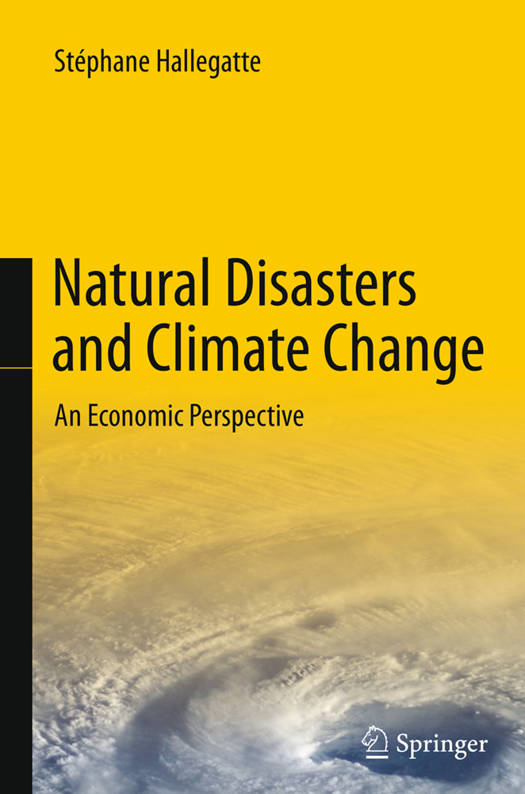
This book explores economic concepts related to disaster losses, describes mechanisms that determine the economic consequences of a disaster, and reviews methodologies for making decisions regarding risk management and adaptation. The author addresses the need for better understanding of the consequences of disasters and reviews and analyzes three scientific debates on linkage between disaster risk management and adaptation to climate change. The first involves the existence and magnitude of long-term economic impact of natural disasters on development. The second is the disagreement over whether any development is the proper solution to high vulnerability to disaster risk. The third debate involves the difficulty of drawing connections between natural disasters and climate change and the challenge in managing them through an integrated strategy. The introduction describes economic views of disaster, including direct and indirect costs, output and welfare losses, and use of econometric tools to measure losses. The next section defines disaster risk, delineates between "good" and "bad" risk-taking, and discusses a pathway to balanced growth. A section entitled "Trends in Hazards and the Role of Climate Change" sets scenarios for climate change analysis, discusses statistical and physical models for downscaling global climate scenarios to extreme event scenarios, and considers how to consider extremes of hot and cold, storms, wind, drought and flood. Another section analyzes case studies on hurricanes and the US coastline; sea-level rises and storm surge in Copenhagen; and heavy precipitation in Mumbai. A section on Methodologies for disaster risk management includes a study on cost-benefit analysis of coastal protections in New Orleans, and one on early-warning systems in developing countries. The next section outlines decision-making in disaster risk management, including robust decision-making, No-regret and No-risk strategies; and strategies that reduce time horizons for decision-making. Among the conclusions is the assertion that risk management policies must recognize the benefits of risk-taking and avoid suppressing it entirely. The main message is that a combination of disaster-risk-reduction, resilience-building and adaptation policies can yield large potential gains and synergies.
Specificaties
Betrokkenen
- Auteur(s):
- Uitgeverij:
Inhoud
- Aantal bladzijden:
- 194
- Taal:
- Engels
Eigenschappen
- Productcode (EAN):
- 9783319380216
- Verschijningsdatum:
- 23/08/2016
- Uitvoering:
- Paperback
- Formaat:
- Trade paperback (VS)
- Afmetingen:
- 156 mm x 234 mm
- Gewicht:
- 312 g


Alleen bij Standaard Boekhandel
+ 216 punten op je klantenkaart van Standaard Boekhandel
Cadeau

AANGERADEN


Beoordelingen
We publiceren alleen reviews die voldoen aan de voorwaarden voor reviews. Bekijk onze voorwaarden voor reviews.