


- Afhalen na 1 uur in een winkel met voorraad
- Gratis thuislevering in België vanaf € 30
- Ruim aanbod met 7 miljoen producten
- Afhalen na 1 uur in een winkel met voorraad
- Gratis thuislevering in België vanaf € 30
- Ruim aanbod met 7 miljoen producten





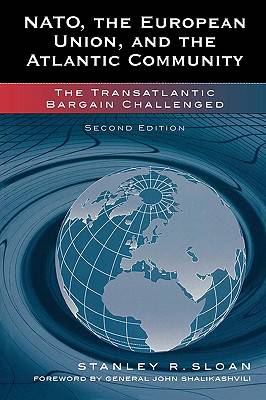
Nato, the European Union, and the Atlantic Community
The Transatlantic Bargain Challenged
Stanley R Sloan
Paperback | Engels
€ 115,45
+ 230 punten
Omschrijving
Now fully revised and updated, this accessible and astute text provides a full interpretive history of the transatlantic alliance and explores critical developments in U.S.-European relations. The first edition highlighted the dangers that U.S. foreign-policy unilateralism could pose for the relationship, a trend that has only intensified over the past few years. Stanley R. Sloan documents and analyzes the substantial ongoing record of U.S. unilateralism and its consequences as the transatlantic and intra-European debate over Iraq produced deep splits among the allies and seriously eroded European trust in U.S. leadership. Ironically, at the same time, the United States and Europe have made historic choices concerning NATO's future, not only continuing the process of enlarging alliance membership but also expanding the concept of NATO's missions to include peacekeeping and enforcement without geographic limitation. Sloan also enlarges on his ideas for a new Euro-Atlantic pact, a call that has now been echoing in both European and American quarters. Assessing both the good and bad news for the alliance, this book remains a central text for college and university courses on U.S.-European relations and transatlantic security issues and thought-provoking reading for all citizens concerned about future US foreign policy and Europe's role in it.
Specificaties
Betrokkenen
- Auteur(s):
- Uitgeverij:
Inhoud
- Aantal bladzijden:
- 352
- Taal:
- Engels
Eigenschappen
- Productcode (EAN):
- 9780742535732
- Verschijningsdatum:
- 28/07/2005
- Uitvoering:
- Paperback
- Formaat:
- Trade paperback (VS)
- Afmetingen:
- 160 mm x 228 mm
- Gewicht:
- 453 g


Alleen bij Standaard Boekhandel
+ 230 punten op je klantenkaart van Standaard Boekhandel
CADEAU

AANGERADEN


Beoordelingen
We publiceren alleen reviews die voldoen aan de voorwaarden voor reviews. Bekijk onze voorwaarden voor reviews.