


- Afhalen na 1 uur in een winkel met voorraad
- Gratis thuislevering in België vanaf € 30
- Ruim aanbod met 7 miljoen producten
- Afhalen na 1 uur in een winkel met voorraad
- Gratis thuislevering in België vanaf € 30
- Ruim aanbod met 7 miljoen producten





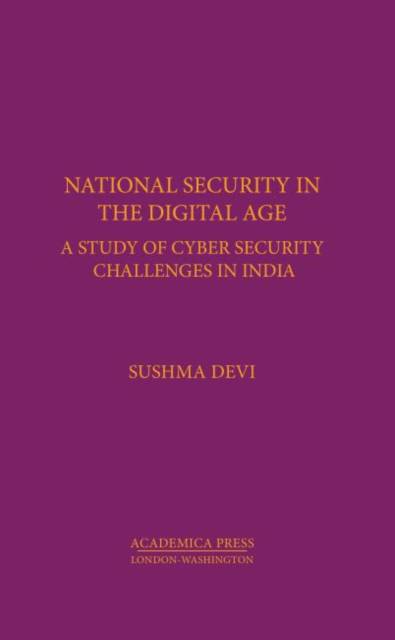
National Security in the Digital Age
Cybersecurity Challenges in India (St. James's Studies in World Affairs)
Sushma Devi
€ 209,95
+ 419 punten
Omschrijving
In this pioneering study, Sushma Devi explores the place of cybersecurity within the larger international debate on security issues. She argues that it is important to begin placing cybersecurity in the context of national security matters since the issues are most often relegated to technology debates. *National Security in the Digital Age *argues that cyber threats can be viewed as national security matters and therefore should be relevant to the security studies field and should be analyzed using security studies theories. It also highlights the policy and institutional responses to cybersecurity challenges undertaken by the government of India. Unexplored security issues frequently identified in the world today, including those in a critical region of international conflict, are thus central to this book. The use of internet is rapidly expanding and has become the core component of everyday society. Yet easy access to data brings along severe security issues. The large number of attacks in recent years have had serious economic and social consequences, resulting in state officials all over the world acknowledging the importance of effective cybersecurity. Nevertheless, implementing effective measures to secure cyberspace remains difficult. A cyber threat has the potential to breach all levels of security very quickly due to the speed with which actions can occur and the extent of our interconnectedness. For a geopolitical realist, states play a central role in addressing cyber threats to national security because they remain the actors with the power and authority to improve defenses against most existential cyber threats. While private sector actors in most countries are critical to security in cyberspace, the threat agents can be criminals, hackers, terrorists, and nation-states. The potential victims at risk from these threats are equally diverse. Threat actors often target personal information to commit fraud, an act that can, in the inter-connected world of cyberspace, make all individuals in a nation potential victims. Herein lies the complexity of analyzing the inflow/outflow of information across borders and the ramification of this analysis for national security.
Specificaties
Betrokkenen
- Auteur(s):
- Uitgeverij:
Inhoud
- Aantal bladzijden:
- 278
- Taal:
- Engels
- Reeks:
Eigenschappen
- Productcode (EAN):
- 9781680534757
- Verschijningsdatum:
- 15/11/2018
- Uitvoering:
- Hardcover
- Formaat:
- Genaaid
- Afmetingen:
- 155 mm x 234 mm
- Gewicht:
- 385 g


Alleen bij Standaard Boekhandel
+ 419 punten op je klantenkaart van Standaard Boekhandel

Beoordelingen
We publiceren alleen reviews die voldoen aan de voorwaarden voor reviews. Bekijk onze voorwaarden voor reviews.