


- Afhalen na 1 uur in een winkel met voorraad
- Gratis thuislevering in België vanaf € 30
- Ruim aanbod met 7 miljoen producten
- Afhalen na 1 uur in een winkel met voorraad
- Gratis thuislevering in België vanaf € 30
- Ruim aanbod met 7 miljoen producten





€ 178,95
+ 357 punten
Omschrijving
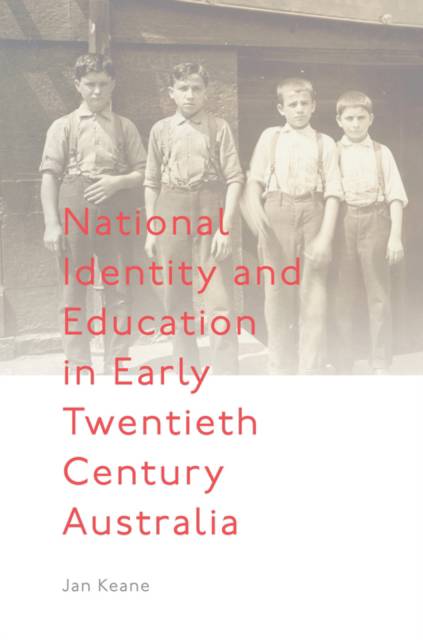
This fascinating book explores how curriculum content in education was used to cultivate a sense of Australian national identity during the first two decades of the twentieth century.
Providing a comprehensive picture of the entire reading curriculum in Victorian government schools over a period of almost two decades, the author demonstrates that, contrary to received wisdom, the Department of Education made every effort to integrate children of different backgrounds. Using three dimensions frequently cited in national identity theory - landscape, history, and mythology - readers are shown how material was chosen specifically to engage young white settler children and to help them overcome their sense of Australia as the 'other'.
National Identity and Education in Early Twentieth Century Australia not only brings about a clearer understanding of how Australia came to be 'Australian' in character, it establishes how curriculum content may be brought into the service of nation-building across the globe.
Providing a comprehensive picture of the entire reading curriculum in Victorian government schools over a period of almost two decades, the author demonstrates that, contrary to received wisdom, the Department of Education made every effort to integrate children of different backgrounds. Using three dimensions frequently cited in national identity theory - landscape, history, and mythology - readers are shown how material was chosen specifically to engage young white settler children and to help them overcome their sense of Australia as the 'other'.
National Identity and Education in Early Twentieth Century Australia not only brings about a clearer understanding of how Australia came to be 'Australian' in character, it establishes how curriculum content may be brought into the service of nation-building across the globe.
Specificaties
Betrokkenen
- Auteur(s):
- Uitgeverij:
Inhoud
- Aantal bladzijden:
- 176
- Taal:
- Engels
Eigenschappen
- Productcode (EAN):
- 9781787692466
- Verschijningsdatum:
- 12/10/2018
- Uitvoering:
- Hardcover
- Formaat:
- Genaaid
- Afmetingen:
- 157 mm x 231 mm
- Gewicht:
- 362 g


Alleen bij Standaard Boekhandel
+ 357 punten op je klantenkaart van Standaard Boekhandel
Cadeau

AANGERADEN


Beoordelingen
We publiceren alleen reviews die voldoen aan de voorwaarden voor reviews. Bekijk onze voorwaarden voor reviews.