


- Afhalen na 1 uur in een winkel met voorraad
- Gratis thuislevering in België vanaf € 30
- Ruim aanbod met 7 miljoen producten
- Afhalen na 1 uur in een winkel met voorraad
- Gratis thuislevering in België vanaf € 30
- Ruim aanbod met 7 miljoen producten





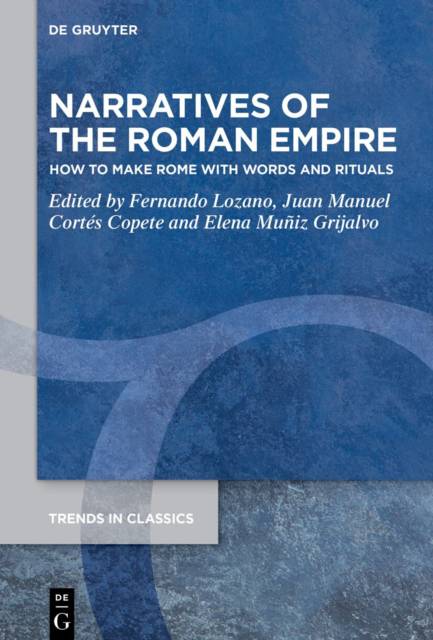
Narratives of the Roman Empire
How to Make Rome with Words and Rituals
€ 133,45
+ 266 punten
Omschrijving
Since Republican times, Rome has fostered ideological constructs aimed at justifying its conquest and domination of the Mediterranean. This process gathered steam in the imperial age, as the contributions of the conquered regions gradually assimilated into the empire.
Words and rituals represented the empire not as the Roman domination of conquered nations, but as a community capable of integrating the provincials. This was not merely an ideological construct: the new community was indeed a result of the integration of different peoples and their political, cultural and religious traditions.
This idea of empire was present at very different levels: documents directly emanating from the emperors and all kinds of literature. Rites also contributed to shaping imperial discourse, laying firm ideological foundations for the symbolic construction of the community and disseminating the imperial discourse among its members.
Words and rituals contributed to creating new mindsets that progressively supplemented the old political and social mores and customs with a new 'narrative of empire', and vice versa: narratives contributed to shaping the very idea of empire.
Words and rituals represented the empire not as the Roman domination of conquered nations, but as a community capable of integrating the provincials. This was not merely an ideological construct: the new community was indeed a result of the integration of different peoples and their political, cultural and religious traditions.
This idea of empire was present at very different levels: documents directly emanating from the emperors and all kinds of literature. Rites also contributed to shaping imperial discourse, laying firm ideological foundations for the symbolic construction of the community and disseminating the imperial discourse among its members.
Words and rituals contributed to creating new mindsets that progressively supplemented the old political and social mores and customs with a new 'narrative of empire', and vice versa: narratives contributed to shaping the very idea of empire.
Specificaties
Betrokkenen
- Uitgeverij:
Inhoud
- Aantal bladzijden:
- 385
- Taal:
- Engels
- Reeks:
- Reeksnummer:
- nr. 192
Eigenschappen
- Productcode (EAN):
- 9783111706931
- Verschijningsdatum:
- 15/12/2025
- Uitvoering:
- Hardcover
- Formaat:
- Genaaid
- Afmetingen:
- 156 mm x 234 mm
- Gewicht:
- 721 g

Alleen bij Standaard Boekhandel
+ 266 punten op je klantenkaart van Standaard Boekhandel
Cadeau

AANGERADEN


Beoordelingen
We publiceren alleen reviews die voldoen aan de voorwaarden voor reviews. Bekijk onze voorwaarden voor reviews.