


- Afhalen na 1 uur in een winkel met voorraad
- Gratis thuislevering in België vanaf € 30
- Ruim aanbod met 7 miljoen producten
- Afhalen na 1 uur in een winkel met voorraad
- Gratis thuislevering in België vanaf € 30
- Ruim aanbod met 7 miljoen producten





€ 86,45
+ 172 punten
Uitvoering
Omschrijving
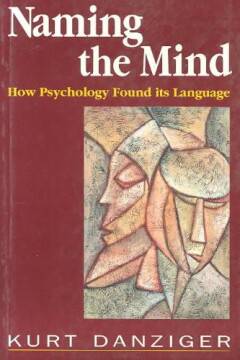
Intelligence, motivation, personality, learning, stimulation, behavior, and attitude are just some of the categories that map the terrain of psychology. These are the concepts that underpin theoretical and empirical work in psychology and yet are terms that have only recently taken on their current meanings. In this fascinating new work, author Kurt Danziger goes beyond the taken-for-granted quality of psychological language to offer a profound and broad-ranging analysis of the recent evolution of the concepts and categories on which it depends. He explores this process and shows how its consequences depend on cultural contexts and the history of an emergent discipline. Danziger develops a complementary account that looks at the historically changing structure of psychological discourse. Naming the Mind is an elegant and persuasive explanation of how modern psychology found its language; it will thus be invaluable reading for students and academics throughout psychology and for anyone with an interest in the history of the human services.
Specificaties
Betrokkenen
- Auteur(s):
- Uitgeverij:
Inhoud
- Aantal bladzijden:
- 224
- Taal:
- Engels
Eigenschappen
- Productcode (EAN):
- 9780803977631
- Verschijningsdatum:
- 6/05/1997
- Uitvoering:
- Paperback
- Formaat:
- Trade paperback (VS)
- Afmetingen:
- 158 mm x 235 mm
- Gewicht:
- 349 g


Alleen bij Standaard Boekhandel
+ 172 punten op je klantenkaart van Standaard Boekhandel
Cadeau

AANGERADEN


Beoordelingen
We publiceren alleen reviews die voldoen aan de voorwaarden voor reviews. Bekijk onze voorwaarden voor reviews.