


- Afhalen na 1 uur in een winkel met voorraad
- Gratis thuislevering in België vanaf € 30
- Ruim aanbod met 7 miljoen producten
- Afhalen na 1 uur in een winkel met voorraad
- Gratis thuislevering in België vanaf € 30
- Ruim aanbod met 7 miljoen producten





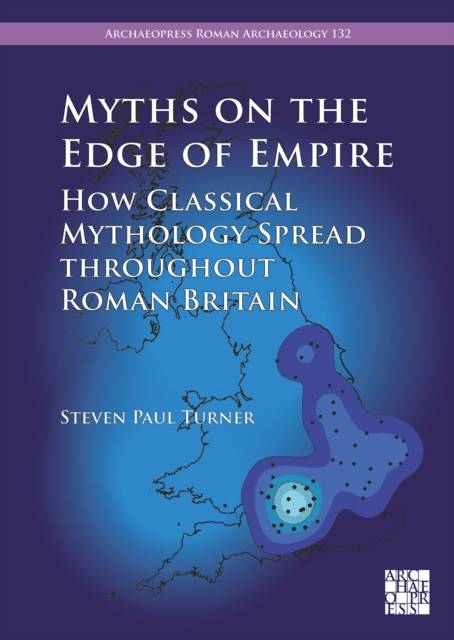
Myths on the Edge of Empire
How Classical Mythology Spread Throughout Roman Britain
Steven Paul Turner
€ 60,95
+ 121 punten
Omschrijving
Myths on the Edge of Empire presents the findings of an extensive investigation into how classical mythology spread across Roman Britain, revealing which characters and deities were the most prevalent, in which contexts, and within which physical media. The reader is initially guided through a series of case studies that use individual mythical entities (Minerva, Mars, Medusa, Hercules, Mercury, and Cupid) to introduce key concepts and observations, as well as drawing attention to the pitfalls of the terminology often employed in explaining complex cultural interchanges. Building upon these findings, more complex patterns are then discussed in thematic chapters that focus on military deities, how myths were combined or displayed together, and the extent to which urban environments were fertile ground for their employment, as well as a typological breakdown and discussion of material culture. As a reference, this book presents a series of graphical displays, one per myth, that show quantities of artefacts, locations, find contexts, and prevalence over time.> Finally, the book classifies and explains the vectors that were used in the cultural transmission of mythology throughout a province that was at the very edge of the Roman Empire.>
Specificaties
Betrokkenen
- Auteur(s):
- Uitgeverij:
Inhoud
- Aantal bladzijden:
- 244
- Taal:
- Engels
- Reeks:
- Reeksnummer:
- nr. 132
Eigenschappen
- Productcode (EAN):
- 9781805831433
- Verschijningsdatum:
- 30/11/2025
- Uitvoering:
- Paperback
- Formaat:
- Trade paperback (VS)
- Afmetingen:
- 173 mm x 245 mm
- Gewicht:
- 235 g



Alleen bij Standaard Boekhandel
+ 121 punten op je klantenkaart van Standaard Boekhandel
CADEAU

AANGERADEN


Beoordelingen
We publiceren alleen reviews die voldoen aan de voorwaarden voor reviews. Bekijk onze voorwaarden voor reviews.