


- Afhalen na 1 uur in een winkel met voorraad
- Gratis thuislevering in België vanaf € 30
- Ruim aanbod met 7 miljoen producten
- Afhalen na 1 uur in een winkel met voorraad
- Gratis thuislevering in België vanaf € 30
- Ruim aanbod met 7 miljoen producten





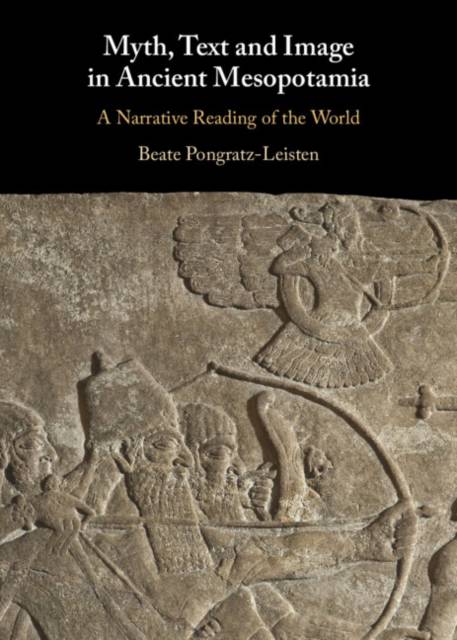
Myth, Text and Image in Ancient Mesopotamia
A Narrative Reading of the World
Beate Pongratz-Leisten
Hardcover | Engels
€ 209,45
+ 418 punten
Omschrijving
This book is about the power of story-telling and the place of myth in the cultural memory of ancient Mesopotamia. Rather than reducing mythology to an archaic state of the mind, this study redefines myth as a system of knowledge (episteme) and part of cognitive and cultural experience serving as an explanatory system. It demonstrates how among the multiple ways of world-making (Nelson Goodman) myth not only reflects experiences and reality but also constitutes reality in text and image alike. Drawing on cognitive semiotics, visual studies, and cognitive narratology, it explores the power of the image in showing and revealing something that is absent (deixis). Thus, it demonstrates the contribution of the image to knowledge production. The book calls for re-introducing meaning when dealing with the imagery and iconology of ancient Mesopotamia and introduces an innovative approach to the art history of the ancient Near East.
Specificaties
Betrokkenen
- Auteur(s):
- Uitgeverij:
Inhoud
- Aantal bladzijden:
- 426
- Taal:
- Engels
Eigenschappen
- Productcode (EAN):
- 9781009629362
- Verschijningsdatum:
- 26/03/2026
- Uitvoering:
- Hardcover
- Formaat:
- Genaaid
- Afmetingen:
- 187 mm x 257 mm
- Gewicht:
- 1043 g


Alleen bij Standaard Boekhandel
+ 418 punten op je klantenkaart van Standaard Boekhandel
Cadeau

AANGERADEN


Beoordelingen
We publiceren alleen reviews die voldoen aan de voorwaarden voor reviews. Bekijk onze voorwaarden voor reviews.