


- Afhalen na 1 uur in een winkel met voorraad
- Gratis thuislevering in België vanaf € 30
- Ruim aanbod met 7 miljoen producten
- Afhalen na 1 uur in een winkel met voorraad
- Gratis thuislevering in België vanaf € 30
- Ruim aanbod met 7 miljoen producten





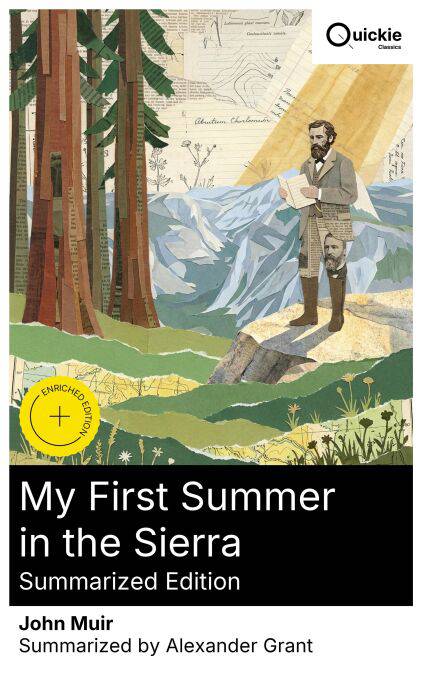
My First Summer in the Sierra (Summarized Edition) E-BOOK
Enriched edition. An 1869 Sierra Nevada journal of Yosemite meadows, sequoias, granite domes, and glaciers—field science at the roots of conservation
John Muir
E-book | Engels
€ 1,99
Omschrijving
Drawn from Muir's 1869 Sierra Nevada journal, My First Summer in the Sierra recounts a season of shepherding transformed into field science. In compressed daily entries, lyrical yet exact, he maps meadows, sequoias, granite domes, and the glacial architecture of Yosemite and the high country. Emersonian cadences meet taxonomic precision, placing the book within late‑nineteenth‑century American nature writing and early ecological thought. Original drawings and period photographs intensify the immediacy, echoing the textures the prose anatomizes. Scottish-born in 1838 and raised on a Wisconsin farm, Muir trained as an inventor until a blinding 1867 injury redirected him to long foot travels and natural study. Self-taught yet rigorous, he advanced Sierra glacial theory, co-founded the Sierra Club in 1892, and shaped park policy. A Calvinist upbringing gives the journal a sacramental register that fuses observation with praise. Readers of Thoreau and environmental history alike will find here both a primer in mountain ecology and a landmark of American prose. For hikers, teachers, and conservationists, the text and images model attentive seeing and the roots of preservationist ethics. Read slowly; let Muir instruct your gaze.
Quickie Classics summarizes timeless works with precision, preserving the author's voice and keeping the prose clear, fast, and readable—distilled, never diluted. Enriched Edition extras: Introduction · Synopsis · Historical Context · Author Biography · Brief Analysis · 4 Reflection Q&As · Editorial Footnotes.
Quickie Classics summarizes timeless works with precision, preserving the author's voice and keeping the prose clear, fast, and readable—distilled, never diluted. Enriched Edition extras: Introduction · Synopsis · Historical Context · Author Biography · Brief Analysis · 4 Reflection Q&As · Editorial Footnotes.
Specificaties
Betrokkenen
- Auteur(s):
- Illustrator(s):
- Uitgeverij:
Inhoud
- Aantal bladzijden:
- 90
- Taal:
- Engels
Eigenschappen
- Productcode (EAN):
- 8596547877899
- Verschijningsdatum:
- 9/01/2026
- Uitvoering:
- E-book
- Beveiligd met:
- Digital watermarking
- Formaat:
- ePub



Alleen bij Standaard Boekhandel
Cadeau

AANGERADEN


Beoordelingen
We publiceren alleen reviews die voldoen aan de voorwaarden voor reviews. Bekijk onze voorwaarden voor reviews.