


- Afhalen na 1 uur in een winkel met voorraad
- Gratis thuislevering in België vanaf € 30
- Ruim aanbod met 7 miljoen producten
- Afhalen na 1 uur in een winkel met voorraad
- Gratis thuislevering in België vanaf € 30
- Ruim aanbod met 7 miljoen producten





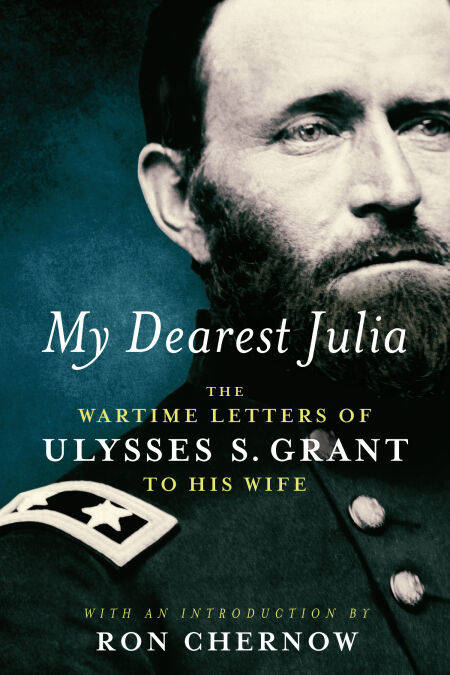
My Dearest Julia: The Wartime Letters of Ulysses S. Grant to His Wife E-BOOK
Ulysses S. Grant
E-book | Engels
€ 19,66
+ 19 punten
Uitvoering
Omschrijving
The Civil War’s greatest general as you’ve never seen him before: A revealing collection of letters written by Ulysses S. Grant to his wife, Julia, perfect for American history buffs.
Grant’s intimate reflections on the War in Mexico and the Civil War “[show] his remarkable evolution from an insecure young soldier to a capable, self-confident general” (Ron Chernow).
Ulysses S. Grant is justly celebrated as the author of one of the finest military autobiographies ever written, yet many readers of his Personal Memoirs are unaware that during his army years Grant wrote hundreds of intimate and revealing letters to his wife, Julia Dent Grant.
Presented with an introduction by acclaimed biographer Ron Chernow, My Dearest Julia collects more than eighty of these letters, beginning with their engagement in 1844 and ending with the Union victory in 1865. They record Grant's first experience under fire in Mexico (“There is no great sport in having bullets flying about one in every direction but I find they have less horror when among them than when in anticipation”), the aching homesickness that led him to resign from the peacetime army, and his rapid rise to high command during the Civil War.
Often written in haste, sometimes within the sound of gunfire, his wartime letters vividly capture the immediacy and uncertainty of the conflict. Grant initially hoped for an early conclusion to the fighting, but then came to accept that the war would have no easy end. “The world has never seen so bloody or so protracted a battle as the one being fought,” he wrote from Spotsylvania in 1864, “and I hope never will again.”
Grant’s intimate reflections on the War in Mexico and the Civil War “[show] his remarkable evolution from an insecure young soldier to a capable, self-confident general” (Ron Chernow).
Ulysses S. Grant is justly celebrated as the author of one of the finest military autobiographies ever written, yet many readers of his Personal Memoirs are unaware that during his army years Grant wrote hundreds of intimate and revealing letters to his wife, Julia Dent Grant.
Presented with an introduction by acclaimed biographer Ron Chernow, My Dearest Julia collects more than eighty of these letters, beginning with their engagement in 1844 and ending with the Union victory in 1865. They record Grant's first experience under fire in Mexico (“There is no great sport in having bullets flying about one in every direction but I find they have less horror when among them than when in anticipation”), the aching homesickness that led him to resign from the peacetime army, and his rapid rise to high command during the Civil War.
Often written in haste, sometimes within the sound of gunfire, his wartime letters vividly capture the immediacy and uncertainty of the conflict. Grant initially hoped for an early conclusion to the fighting, but then came to accept that the war would have no easy end. “The world has never seen so bloody or so protracted a battle as the one being fought,” he wrote from Spotsylvania in 1864, “and I hope never will again.”
Specificaties
Betrokkenen
- Auteur(s):
- Uitgeverij:
Inhoud
- Aantal bladzijden:
- 183
- Taal:
- Engels
Eigenschappen
- Productcode (EAN):
- 9781598535907
- Verschijningsdatum:
- 15/10/2018
- Uitvoering:
- E-book
- Beveiligd met:
- Adobe DRM
- Formaat:
- ePub


Alleen bij Standaard Boekhandel
+ 19 punten op je klantenkaart van Standaard Boekhandel
Cadeau

AANGERADEN


Beoordelingen
We publiceren alleen reviews die voldoen aan de voorwaarden voor reviews. Bekijk onze voorwaarden voor reviews.