


- Afhalen na 1 uur in een winkel met voorraad
- Gratis thuislevering in België vanaf € 30
- Ruim aanbod met 7 miljoen producten
- Afhalen na 1 uur in een winkel met voorraad
- Gratis thuislevering in België vanaf € 30
- Ruim aanbod met 7 miljoen producten





€ 116,60
+ 233 punten
Omschrijving
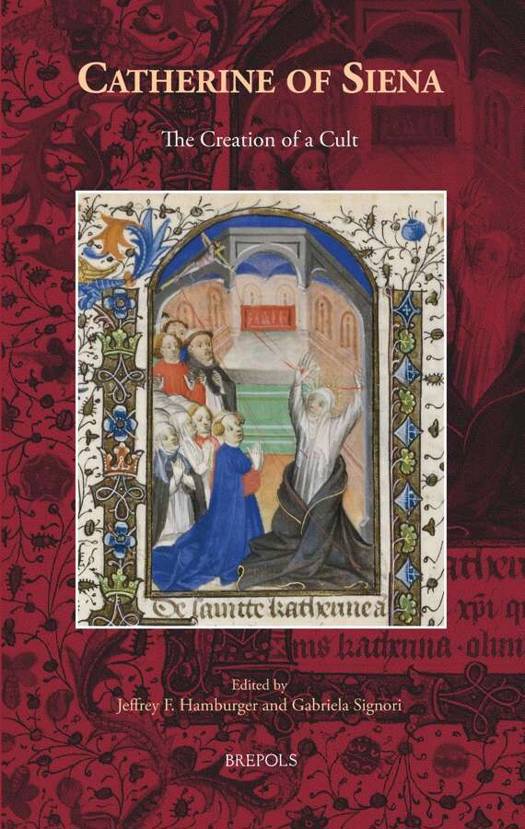
How does one construct a saint and promote a cult beyond the immediate community in which he or she lived? Italian mendicants had accumulated a good deal of experience in dealing with this politically explosive question. The posthumous description of the life of Francis of Assisi (d. 1226) written by the Master General of the order, Bonaventure (d. 1274), could be regarded as paradigmatic in this regard. A similarly massive intervention in the production and diffusion of a cult can be observed in the case of the Dominican tertiary, Catherine of Siena (d. 1380), who in many respects (e.g. the imitation of Christ and her stigmatization) 'competed' with Francis of Assisi. Raymund of Capua (d. 1399), the Master General of the order, established the foundation for the dissemination of the cult by writing the authoritative life, but it was only the following generation that succeeded in establishing and disseminating the cult on a broad basis by means of copies, adaptations, and translations. The question of how to make a cult, which stands at the center of this volume, thus presents itself in terms of the challenge of rewriting a legend for different audiences. The various contributions consider the role, not only of texts in many different vernaculars (Czech, English, French, German, and Italian), but also of images, whether separately or in connection with one another.
Specificaties
Betrokkenen
- Auteur(s):
- Uitgeverij:
Inhoud
- Aantal bladzijden:
- 352
- Taal:
- Engels
- Reeks:
- Reeksnummer:
- nr. 13
Eigenschappen
- Productcode (EAN):
- 9782503544151
- Verschijningsdatum:
- 9/12/2013
- Uitvoering:
- Hardcover
- Formaat:
- Genaaid
- Afmetingen:
- 165 mm x 239 mm
- Gewicht:
- 703 g



Alleen bij Standaard Boekhandel
+ 233 punten op je klantenkaart van Standaard Boekhandel
Cadeau

AANGERADEN


Beoordelingen
We publiceren alleen reviews die voldoen aan de voorwaarden voor reviews. Bekijk onze voorwaarden voor reviews.