



Bedankt voor het vertrouwen het afgelopen jaar! Om jou te bedanken bieden we GRATIS verzending (in België) aan op alles gedurende de hele maand januari.
- Afhalen na 1 uur in een winkel met voorraad
- In januari gratis thuislevering in België
- Ruim aanbod met 7 miljoen producten
Bedankt voor het vertrouwen het afgelopen jaar! Om jou te bedanken bieden we GRATIS verzending (in België) aan op alles gedurende de hele maand januari.
- Afhalen na 1 uur in een winkel met voorraad
- In januari gratis thuislevering in België
- Ruim aanbod met 7 miljoen producten





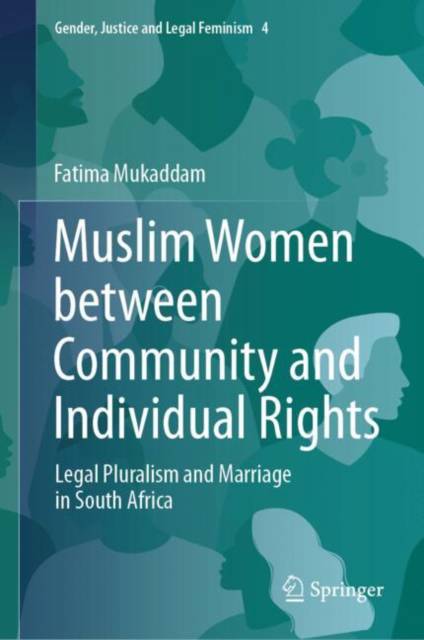
Muslim Women Between Community and Individual Rights
Legal Pluralism and Marriage in South Africa
Fatima Mukaddam
€ 183,45
+ 366 punten
Omschrijving
This book presents an in-depth exploration of the intricate negotiations of married Muslim women within Cape Town's Muslim communities, navigating the complexities of legal pluralism governed by Muslim Personal Law (MPL). Spanning historical epochs from colonialism to the democratic era, it argues that MPL's informal status perpetuates patriarchal norms, especially in the domain of marriage. It critically examines the consequences of the non-recognition of Muslim marriages within the civil legal framework and underscores the ambiguous intersections of MPL with broader legal systems, which leaves women in a precarious legal state overshadowed by religious doctrines.
Adopting a gender perspective and an interdisciplinary approach that combines political science, sociology, and the law, the book reveals the historical roots of legal pluralism, while also shedding light on the political strategies that have perpetuated gender-stratified citizenship. Despite all the democratic promises, legal pluralism persists, contributing to gender disparities, and the book critically examines the government's reluctance to address the marginalisation of Muslim women, especially through the lens of the proposed Muslim Marriages Bill (MMB).
This book is essential reading for scholars in the fields of law, sociology, and gender studies, offering critical insights into the intersections of legal systems, religion, and gender dynamics within Muslim communities in Cape Town.
Adopting a gender perspective and an interdisciplinary approach that combines political science, sociology, and the law, the book reveals the historical roots of legal pluralism, while also shedding light on the political strategies that have perpetuated gender-stratified citizenship. Despite all the democratic promises, legal pluralism persists, contributing to gender disparities, and the book critically examines the government's reluctance to address the marginalisation of Muslim women, especially through the lens of the proposed Muslim Marriages Bill (MMB).
This book is essential reading for scholars in the fields of law, sociology, and gender studies, offering critical insights into the intersections of legal systems, religion, and gender dynamics within Muslim communities in Cape Town.
Specificaties
Betrokkenen
- Auteur(s):
- Uitgeverij:
Inhoud
- Aantal bladzijden:
- 152
- Taal:
- Engels
- Reeks:
- Reeksnummer:
- nr. 4
Eigenschappen
- Productcode (EAN):
- 9783031546136
- Verschijningsdatum:
- 12/05/2024
- Uitvoering:
- Hardcover
- Formaat:
- Genaaid
- Afmetingen:
- 156 mm x 234 mm
- Gewicht:
- 412 g


Alleen bij Standaard Boekhandel
+ 366 punten op je klantenkaart van Standaard Boekhandel
SOLDEN


Beoordelingen
We publiceren alleen reviews die voldoen aan de voorwaarden voor reviews. Bekijk onze voorwaarden voor reviews.