


- Afhalen na 1 uur in een winkel met voorraad
- Gratis thuislevering in België vanaf € 30
- Ruim aanbod met 7 miljoen producten
- Afhalen na 1 uur in een winkel met voorraad
- Gratis thuislevering in België vanaf € 30
- Ruim aanbod met 7 miljoen producten





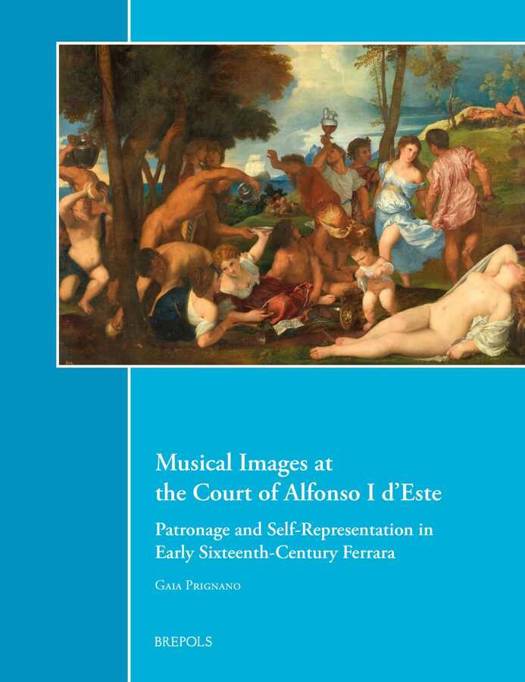
Musical Images at the Court of Alfonso I d'Este
Patronage and Self-Representation in Early Sixteenth-Century Ferrara
Gaia Prignano
€ 95,40
+ 190 punten
Omschrijving
Alfonso I d'Este ruled Ferrara from 1505 to 1534. His passionate patronage raised the arts and music to unprecedented heights despite frequent wars and chronic economic difficulties. His reign was characterized by a stunning proliferation of sacred and profane musical images, reflecting the central role played by music in his personal life and the city as a whole. Musical elements featured in works commissioned not only by the Duke himself but also by other members of his family, prominent members of the nobility, and the highest-ranking religious orders, whose collective love of music led to fruitful "dialogue". The book addresses the rich musical imaginary at the court of Alfonso I, investigating the identity, laudatory, moral, and allegorical meanings ascribed to musical images. It explores the network of shared knowledge and values underpinning the creation of these works, analysing their distinctive use in courtly dynamics. This exceptional corpus of images offers a broad overview of iconographic themes, often steeped in humanistic references, in which various forms of music are present at different levels. Most of these artworks, which include masterpieces by Titian, Bellini, Dosso Dossi, and Antonio Lombardo, are examined here for the first time through a musical-iconographic approach. Special attention is focused on the mythological iconographic program of the Duke's lost studiolo (the Camerino delle Pitture), which has also been reconstructed in a new interactive virtual tour, enhanced by original musical content. Finally, the book includes the first complete catalogue documenting musical iconography in Ferrara under Alfonso I.
Specificaties
Betrokkenen
- Auteur(s):
- Uitgeverij:
Inhoud
- Aantal bladzijden:
- 230
- Taal:
- Engels
- Reeks:
- Reeksnummer:
- nr. 8
Eigenschappen
- Productcode (EAN):
- 9782503599984
- Verschijningsdatum:
- 6/10/2022
- Uitvoering:
- Paperback
- Formaat:
- Trade paperback (VS)
- Gewicht:
- 6028 g


Alleen bij Standaard Boekhandel
+ 190 punten op je klantenkaart van Standaard Boekhandel
Cadeau

AANGERADEN


Beoordelingen
We publiceren alleen reviews die voldoen aan de voorwaarden voor reviews. Bekijk onze voorwaarden voor reviews.