


- Afhalen na 1 uur in een winkel met voorraad
- Gratis thuislevering in België vanaf € 30
- Ruim aanbod met 7 miljoen producten
- Afhalen na 1 uur in een winkel met voorraad
- Gratis thuislevering in België vanaf € 30
- Ruim aanbod met 7 miljoen producten





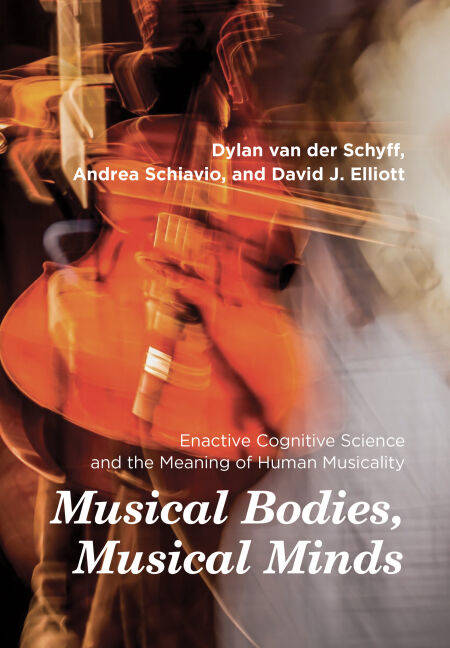
Musical Bodies, Musical Minds E-BOOK
Enactive Cognitive Science and the Meaning of Human Musicality
Dylan van der Schyff, Andrea Schiavio, David J. Elliott
E-book | Engels
€ 39,42
+ 39 punten
Uitvoering
Eenvoudig bestellen
Veilig betalen


Onmiddellijk geleverd via e-mail
Omschrijving
An enactive account of musicality that proposes new ways of thinking about musical experience, musical development in infancy, music and evolution, and more.
Musical Bodies, Musical Minds offers an innovative account of human musicality that draws on recent developments in embodied cognitive science. The authors explore musical cognition as a form of sense-making that unfolds across the embodied, environmentally embedded, and sociomaterially extended dimensions that compose the enactment of human worlds of meaning. This perspective enables new ways of understanding musical experience, the development of musicality in infancy and childhood, music’s emergence in human evolution, and the nature of musical emotions, empathy, and creativity.
Developing their account, the authors link a diverse array of ideas from fields including neuroscience, theoretical biology, psychology, developmental studies, social cognition, and education. Drawing on these insights, they show how dynamic processes of adaptive body-brain-environment interactivity drive musical cognition across a range of contexts, extending it beyond the personal (inner) domain of musical agents and out into the material and social worlds they inhabit and influence. An enactive approach to musicality, they argue, can reveal important aspects of human being and knowing that are often lost or obscured in the modern technologically driven world.
Musical Bodies, Musical Minds offers an innovative account of human musicality that draws on recent developments in embodied cognitive science. The authors explore musical cognition as a form of sense-making that unfolds across the embodied, environmentally embedded, and sociomaterially extended dimensions that compose the enactment of human worlds of meaning. This perspective enables new ways of understanding musical experience, the development of musicality in infancy and childhood, music’s emergence in human evolution, and the nature of musical emotions, empathy, and creativity.
Developing their account, the authors link a diverse array of ideas from fields including neuroscience, theoretical biology, psychology, developmental studies, social cognition, and education. Drawing on these insights, they show how dynamic processes of adaptive body-brain-environment interactivity drive musical cognition across a range of contexts, extending it beyond the personal (inner) domain of musical agents and out into the material and social worlds they inhabit and influence. An enactive approach to musicality, they argue, can reveal important aspects of human being and knowing that are often lost or obscured in the modern technologically driven world.
Specificaties
Betrokkenen
- Auteur(s):
- Uitgeverij:
Inhoud
- Aantal bladzijden:
- 322
- Taal:
- Engels
Eigenschappen
- Productcode (EAN):
- 9780262362108
- Verschijningsdatum:
- 29/08/2022
- Uitvoering:
- E-book
- Beveiligd met:
- Adobe DRM
- Formaat:
- ePub


Alleen bij Standaard Boekhandel
+ 39 punten op je klantenkaart van Standaard Boekhandel
CADEAU

AANGERADEN


Beoordelingen
We publiceren alleen reviews die voldoen aan de voorwaarden voor reviews. Bekijk onze voorwaarden voor reviews.