



Bedankt voor het vertrouwen het afgelopen jaar! Om jou te bedanken bieden we GRATIS verzending (in België) aan op alles gedurende de hele maand januari.
- Afhalen na 1 uur in een winkel met voorraad
- In januari gratis thuislevering in België
- Ruim aanbod met 7 miljoen producten
Bedankt voor het vertrouwen het afgelopen jaar! Om jou te bedanken bieden we GRATIS verzending (in België) aan op alles gedurende de hele maand januari.
- Afhalen na 1 uur in een winkel met voorraad
- In januari gratis thuislevering in België
- Ruim aanbod met 7 miljoen producten





Omschrijving
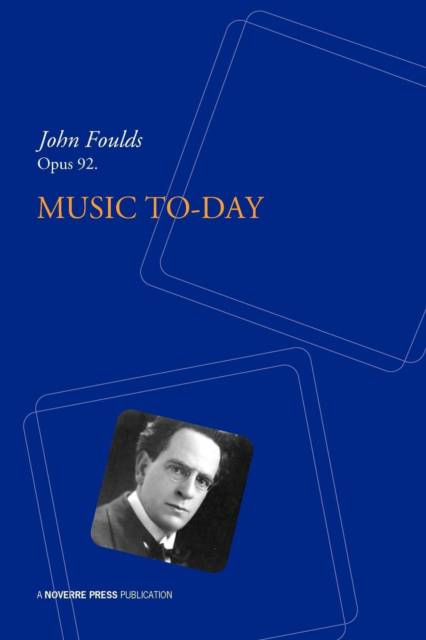
John Foulds was born in Manchester in 1880. The son of a bassoonist in the Hallé Orchestra, he composed copiously from childhood. Initially an orchestral 'cellist, he soon left the Hallé to concentrate on composition. His first successes were in light orchestral music, but he later turned to more serious idioms, finding great acclaim with his A World Requiem (1919-21), composed in memory of the war dead of all nations. In 1935 he travelled to India, where he developed an interest in its music and was also appointed Director of European Music at All-India Radio, Delhi. He died suddenly from cholera in 1939. His study of contemporary music and its sources of inspiration, Music To-day, published in 1934, declared his intellectual openness to the whole gamut of modern techniques, which he absorbed and employed as the context required. His most admired contemporaries included Busoni, Scriabin and Bartók; among English-speaking composers his output has affinities with Grainger and Holst. The book begins with a conversation between a Musician of Former Times and a Musician of Today, who discuss three fragments of music that are printed at the head of the chapter (all from Foulds' own compositions). The Musician of Former Times, scratching his head over examples of polytonality, atonality and the use of microtones concludes "Well, although interesting, it is all rather confusing.... and I still wish that composers would say what they have to say in terms which I can understand." In response the Musician of Today quotes Berlioz "Music nowadays, in her vigorous youth, is free, is emancipated and can do what she pleases ... new needs of the mind, of the heart and of the sense of hearing, make necessary new endeavours." Thereafter the book veers dizzyingly from modality to Eastern mysticism by way of abstruse theorizing about the "ensouling of music" and an art of the future that would be perceived by all senses at once. Foulds concludes by quoting the Swiss philosopher Henri Frédéric Amiel: "Music is harmony, harmony is perfection, perfection is our dream, and our dream is heaven."
Specificaties
Betrokkenen
- Auteur(s):
- Uitgeverij:
Inhoud
- Aantal bladzijden:
- 394
- Taal:
- Engels
Eigenschappen
- Productcode (EAN):
- 9781906830311
- Verschijningsdatum:
- 23/11/2010
- Uitvoering:
- Paperback
- Formaat:
- Trade paperback (VS)
- Afmetingen:
- 156 mm x 234 mm
- Gewicht:
- 548 g



Alleen bij Standaard Boekhandel
+ 94 punten op je klantenkaart van Standaard Boekhandel
SOLDEN


Beoordelingen
We publiceren alleen reviews die voldoen aan de voorwaarden voor reviews. Bekijk onze voorwaarden voor reviews.