


- Afhalen na 1 uur in een winkel met voorraad
- Gratis thuislevering in België vanaf € 30
- Ruim aanbod met 7 miljoen producten
- Afhalen na 1 uur in een winkel met voorraad
- Gratis thuislevering in België vanaf € 30
- Ruim aanbod met 7 miljoen producten





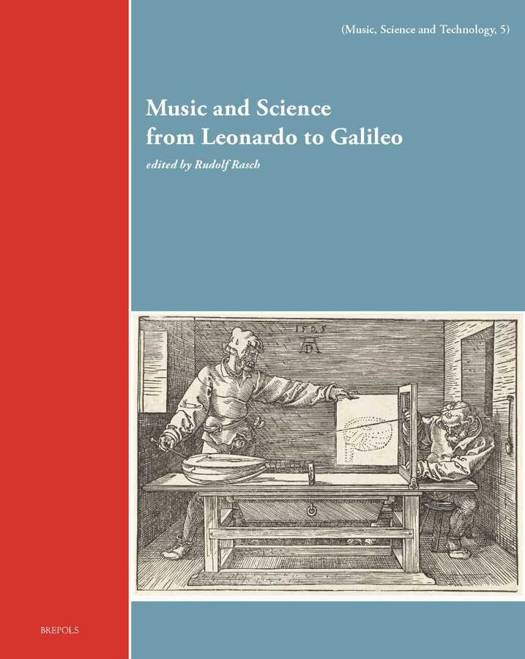
Music and Science from Leonardo to Galileo
Rudolf Rasch
€ 127,20
+ 254 punten
Omschrijving
Music is not only an art (either as the art of composition or the art of performance) but also a subject for scientific investigation. Scientists have always been interested in musical sound, philosophers in the impact of music on the human mind, and musicians may have been puzzled by the scientific foundations of their art. This book collects fourteen studies by authors from various countries about the interrelations between music and science as apparent in the long century from the lifetime of Leonardo da Vinci (1452-1519) to that of Galileo Galilei (1564-1642), a period termed Renaissance, Early Modern or the time of the (first) Scientific Revolution depending on the angle from which this period is approached. It is a time when the Aristotelian physics was replaced by modern pre-Newtonian physics, when Catholicism was challenged by the Reformation, when traditional polyphonic musical styles were supplemented by new monodic styles, vocal and instrumental. Both Leonardo and Galileo had vivid interests in music, but they were not the only ones. The ideas of scientists and philosophers, such as Marin Mersenne, Rene Descartes, Giordano Bruno and Philipp Melanchton are also discussed.
Specificaties
Betrokkenen
- Auteur(s):
- Uitgeverij:
Inhoud
- Aantal bladzijden:
- 440
- Taal:
- Frans
- Reeks:
- Reeksnummer:
- nr. 5
Eigenschappen
- Productcode (EAN):
- 9782503600802
- Verschijningsdatum:
- 26/07/2022
- Uitvoering:
- Hardcover
- Formaat:
- Genaaid
- Afmetingen:
- 213 mm x 274 mm
- Gewicht:
- 1319 g


Alleen bij Standaard Boekhandel
+ 254 punten op je klantenkaart van Standaard Boekhandel
Cadeau

AANGERADEN


Beoordelingen
We publiceren alleen reviews die voldoen aan de voorwaarden voor reviews. Bekijk onze voorwaarden voor reviews.