


- Afhalen na 1 uur in een winkel met voorraad
- Gratis thuislevering in België vanaf € 30
- Ruim aanbod met 7 miljoen producten
- Afhalen na 1 uur in een winkel met voorraad
- Gratis thuislevering in België vanaf € 30
- Ruim aanbod met 7 miljoen producten





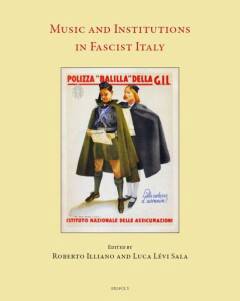
Music and Institutions in Fascist Italy
Roberto Illiano
€ 127,20
+ 254 punten
Omschrijving
In the 1920s and 1930s, the entire process of renovation of the cultural institutions conducted by the Fascists, implemented through the Ministry of National Education, imposed a strong concentration of power on the Italian school administrations, especially the universities, and created new national institutions. At the same time, the Fascist Cultural Institute (IFC), which under the leadership of Giovanni Gentile aspired to be a charitable organisation for the promotion of the culture typical of pre-Fascist associations, was placed after 1937 directly under the National Fascist Party, which changed its name to the National Institute of Fascist Culture (INCF), with the aim of giving the party itself the task of educating the new leadership. The relationship between intellectuals and power under Fascism was aligned into a perspective of orientation that attributed the party with the role of educator of homo novus, summarised in a phrase from Mussolini himself: "Fascism is a great orchestra, where everyone plays a different instrument". A particular concern of the ruling class was to develop a production-fruition process involving all social classes, in order to offer them the feeling of being part of a solid, free and fair system. However, this conception was not explicit in the artistic expressions of the regime: the construction of a social apparatus proceeded underground through the channels of the productive and hierarchical apparatus of the institutions, rather than through the creation of a tangible aesthetic of the regime. In summary: culture had to be the expression of a common heritage belonging both to the people and to the intellectuals; it bore the task of providing a fascist conception of the world.
Specificaties
Betrokkenen
- Auteur(s):
- Uitgeverij:
Inhoud
- Aantal bladzijden:
- 416
- Taal:
- Engels
- Reeks:
- Reeksnummer:
- nr. 10
Eigenschappen
- Productcode (EAN):
- 9782503611846
- Verschijningsdatum:
- 12/08/2024
- Uitvoering:
- Hardcover
- Formaat:
- Genaaid
- Gewicht:
- 1610 g


Alleen bij Standaard Boekhandel
+ 254 punten op je klantenkaart van Standaard Boekhandel
Cadeau

AANGERADEN


Beoordelingen
We publiceren alleen reviews die voldoen aan de voorwaarden voor reviews. Bekijk onze voorwaarden voor reviews.