


- Afhalen na 1 uur in een winkel met voorraad
- Gratis thuislevering in België vanaf € 30
- Ruim aanbod met 7 miljoen producten
- Afhalen na 1 uur in een winkel met voorraad
- Gratis thuislevering in België vanaf € 30
- Ruim aanbod met 7 miljoen producten





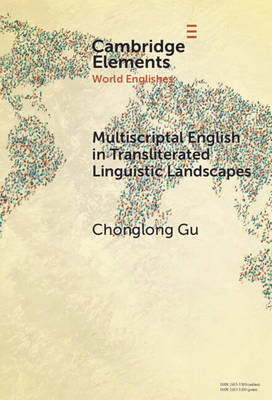
Multiscriptal English in Transliterated Linguistic Landscapes
Chonglong Gu
€ 124,45
+ 248 punten
Uitvoering
Omschrijving
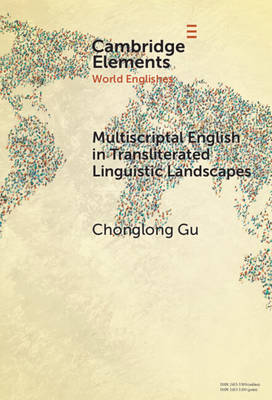
In this monograph, 'multiscriptal English' is theorised. Unorthodox and unconventional this may sound, a salient sociolinguistic reality is emerging globally. That is, while standardised English (Roman script) is routinely taught and used, English in superdiverse, multilingual, and/or (post)colonial societies is often camouflaged in local scripts and 'passes off' as local languages in these places' linguistic landscapes through transliteration (at lexical, phrasal and sentential levels). To illustrate, documentary evidence from Arabic, Malay (Jawi), Nepali, Urdu, Tamil, Korean, Japanese, Russian, Thai, etc. is presented. Through inter-scriptal rendition, English is glocalised and enshrined in seemingly 'exotic' scripts that embody different socio-political and religious worldviews. In the (re)contextualisation process, English inevitably undergoes transformations and adopts new flavours. This gives English a second life with multiple manifestations/incarnations in new contexts. This points to the juggernaut of English in our globalised/neoliberal world. The existence of multiscriptal English necessitates more coordinated and interdisciplinary research efforts going forward.
Specificaties
Betrokkenen
- Auteur(s):
- Uitgeverij:
Inhoud
- Aantal bladzijden:
- 126
- Taal:
- Engels
- Reeks:
Eigenschappen
- Productcode (EAN):
- 9781009490061
- Verschijningsdatum:
- 13/02/2025
- Uitvoering:
- Hardcover
- Formaat:
- Genaaid
- Afmetingen:
- 152 mm x 229 mm
- Gewicht:
- 340 g


Alleen bij Standaard Boekhandel
+ 248 punten op je klantenkaart van Standaard Boekhandel
Cadeau

AANGERADEN


Beoordelingen
We publiceren alleen reviews die voldoen aan de voorwaarden voor reviews. Bekijk onze voorwaarden voor reviews.