


- Afhalen na 1 uur in een winkel met voorraad
- Gratis thuislevering in België vanaf € 30
- Ruim aanbod met 7 miljoen producten
- Afhalen na 1 uur in een winkel met voorraad
- Gratis thuislevering in België vanaf € 30
- Ruim aanbod met 7 miljoen producten





€ 27,55
+ 27 punten
Uitvoering
Omschrijving
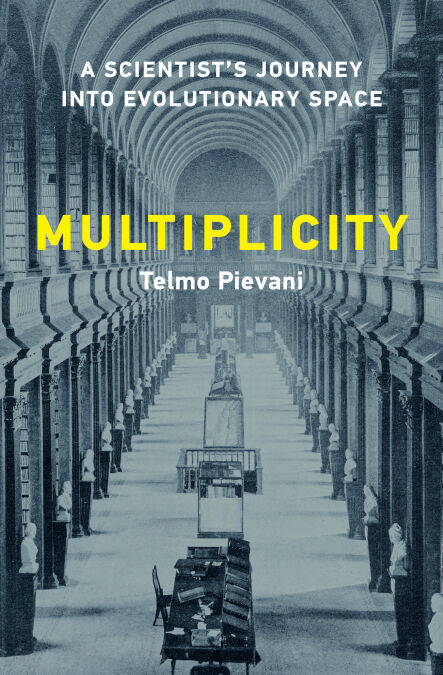
The awe-inspiring, little-known story of Nobel laureate Frances Arnold’s discovery of directed enzyme evolution—and how it was sparked by reading Jorge Luis Borges.
In 1976, a young engineering student from Princeton, Frances Arnold, happened upon Jorge Luis Borges’s short story The Library of Babel while in Madrid—the tale of a vast honeycomb of a library that contains all the answers to the mysteries of humanity. Little did Arnold know that the story would change the course of her life—and the course of science.
In Multiplicity, Telmo Pievani explores her journey and the significance—and scientific potential—of Borges’s legendary library and others like it. A famous evolutionist, John Maynard Smith, for instance, had fantasized about the existence of a similar enormous library: full not of books, but of proteins. And, in 1994, a philosopher of mind, Daniel Dennett, would devise a library no less confounding: one that collects all possible genomes, or all the possible combinations of the nucleotide bases of DNA. Why? Because by comparing all the proteins, genomes, and plants and animals that exist and have existed throughout evolution, what is finally revealed is possibility: what doesn’t exist but could.
For Frances Arnold, the concept of such a library ultimately led to the discovery of the directed evolution of enzymes: a way of using nature’s own method to produce new and better enzymes. The revolutionary idea transformed protein chemistry and biotechnology and earned her the Nobel prize in chemistry in 2018.
With literary echoes ranging from Borges to Italo Calvino, this slim book tells her brilliant story.
In 1976, a young engineering student from Princeton, Frances Arnold, happened upon Jorge Luis Borges’s short story The Library of Babel while in Madrid—the tale of a vast honeycomb of a library that contains all the answers to the mysteries of humanity. Little did Arnold know that the story would change the course of her life—and the course of science.
In Multiplicity, Telmo Pievani explores her journey and the significance—and scientific potential—of Borges’s legendary library and others like it. A famous evolutionist, John Maynard Smith, for instance, had fantasized about the existence of a similar enormous library: full not of books, but of proteins. And, in 1994, a philosopher of mind, Daniel Dennett, would devise a library no less confounding: one that collects all possible genomes, or all the possible combinations of the nucleotide bases of DNA. Why? Because by comparing all the proteins, genomes, and plants and animals that exist and have existed throughout evolution, what is finally revealed is possibility: what doesn’t exist but could.
For Frances Arnold, the concept of such a library ultimately led to the discovery of the directed evolution of enzymes: a way of using nature’s own method to produce new and better enzymes. The revolutionary idea transformed protein chemistry and biotechnology and earned her the Nobel prize in chemistry in 2018.
With literary echoes ranging from Borges to Italo Calvino, this slim book tells her brilliant story.
Specificaties
Betrokkenen
- Auteur(s):
- Uitgeverij:
Inhoud
- Aantal bladzijden:
- 176
- Taal:
- Engels
Eigenschappen
- Productcode (EAN):
- 9780262054980
- Verschijningsdatum:
- 5/10/2026
- Uitvoering:
- E-book
- Beveiligd met:
- Adobe DRM
- Formaat:
- ePub


Alleen bij Standaard Boekhandel
+ 27 punten op je klantenkaart van Standaard Boekhandel
Cadeau

AANGERADEN


Beoordelingen
We publiceren alleen reviews die voldoen aan de voorwaarden voor reviews. Bekijk onze voorwaarden voor reviews.