


- Afhalen na 1 uur in een winkel met voorraad
- Gratis thuislevering in België vanaf € 30
- Ruim aanbod met 7 miljoen producten
- Afhalen na 1 uur in een winkel met voorraad
- Gratis thuislevering in België vanaf € 30
- Ruim aanbod met 7 miljoen producten





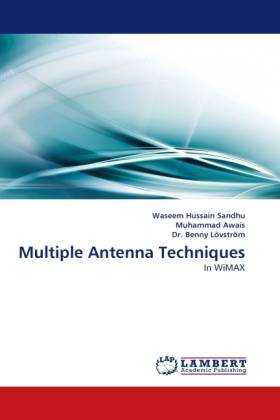
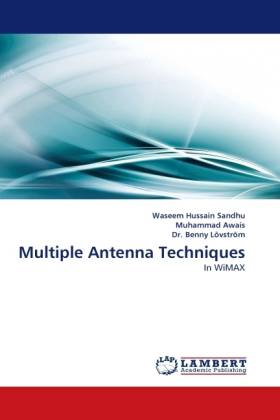
Multiple Antenna Techniques
In WiMAX
Waseem Hussain Sandhu, Muhammad Awais, Benny Lövström
Paperback | Engels
€ 48,45
+ 96 punten
Omschrijving
Worldwide Interoperability for Microwave Access (WiMAX) is currently one of the most widely used Telecommunication Protocol due to its high data rates. This book provides some basic understanding of WiMAX systems and different antenna techniques used in them. Chapter 1 is about introduction. It briefly discusses the history of wireless communication, different types of data networks, an overview of IEEE 802 Family Standards and 802.16 / WiMAX Standard. Chapter 2 is about the technical overview of WiMAX. It is divided into 3 parts. First part discusses the Physical layer of WiMAX. Second part discusses the MAC layer of WiMAX. Third part discusses the Network Architecture of WiMAX. Chapter 3 discusses about multiple antenna systems in WiMAX. It briefly discusses Diversity schemes (i.e Space Time Coding, Antenna Switching, Maximum Ratio Combining), Smart Antenna Systems and Multiple Input Multiple Output (MIMO) Systems. It also discusses short comings of classified MIMO theories and modern methods for MIMO systems. Chapter 4 discusses the MATLAB simulations based on these multiple antenna techniques. Chapter 5 is about conclusion and future work.
Specificaties
Betrokkenen
- Auteur(s):
- Uitgeverij:
Inhoud
- Aantal bladzijden:
- 72
- Taal:
- Engels
Eigenschappen
- Productcode (EAN):
- 9783838365718
- Verschijningsdatum:
- 26/05/2010
- Uitvoering:
- Paperback
- Afmetingen:
- 152 mm x 229 mm
- Gewicht:
- 118 g


Alleen bij Standaard Boekhandel
+ 96 punten op je klantenkaart van Standaard Boekhandel
Cadeau

AANGERADEN


Beoordelingen
We publiceren alleen reviews die voldoen aan de voorwaarden voor reviews. Bekijk onze voorwaarden voor reviews.