


- Afhalen na 1 uur in een winkel met voorraad
- Gratis thuislevering in België vanaf € 30
- Ruim aanbod met 7 miljoen producten
- Afhalen na 1 uur in een winkel met voorraad
- Gratis thuislevering in België vanaf € 30
- Ruim aanbod met 7 miljoen producten





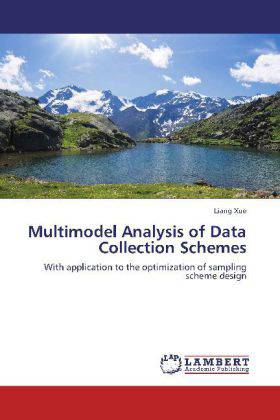
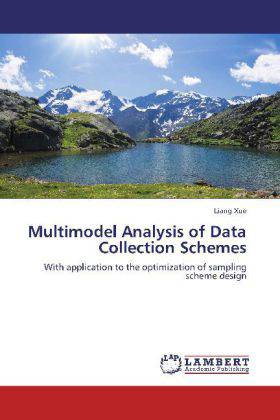
Multimodel Analysis of Data Collection Schemes
With application to the optimization of sampling scheme design
Liang Xue
Paperback | Engels
€ 67,45
+ 134 punten
Omschrijving
The rational management of groundwater resource systems requires an understanding of their response to existing and planned schemes of exploitation, pollution prevention and/or remediation. Such understanding in turn requires collecting suitable data to characterize the system, model flow and transport within it and monitor its response to stresses. The high cost of subsurface data acquisition requires that they be collected in a judicious and effective manner. Previous approaches to the assessment and optimization of data collection schemes have generally considered the underlying models to be known and accurate. In reality, the complex nature of hydrogeologic environments renders available data prone to multiple interpretations and the system subject to alternative ways of representation by models. Multimodel analysis method within the framework of Bayesian model averaging and its maximum likelihood version is used to analyze the worth of data and a discrete variable version of the Differential Evolution method is introduced to optimize the locations of prospective new data so as to reduce overall predictive uncertainty.
Specificaties
Betrokkenen
- Auteur(s):
- Uitgeverij:
Inhoud
- Aantal bladzijden:
- 172
- Taal:
- Engels
Eigenschappen
- Productcode (EAN):
- 9783848407873
- Verschijningsdatum:
- 9/03/2012
- Uitvoering:
- Paperback
- Afmetingen:
- 152 mm x 220 mm
- Gewicht:
- 259 g


Alleen bij Standaard Boekhandel
+ 134 punten op je klantenkaart van Standaard Boekhandel
Cadeau

AANGERADEN


Beoordelingen
We publiceren alleen reviews die voldoen aan de voorwaarden voor reviews. Bekijk onze voorwaarden voor reviews.