


- Afhalen na 1 uur in een winkel met voorraad
- Gratis thuislevering in België vanaf € 30
- Ruim aanbod met 7 miljoen producten
- Afhalen na 1 uur in een winkel met voorraad
- Gratis thuislevering in België vanaf € 30
- Ruim aanbod met 7 miljoen producten





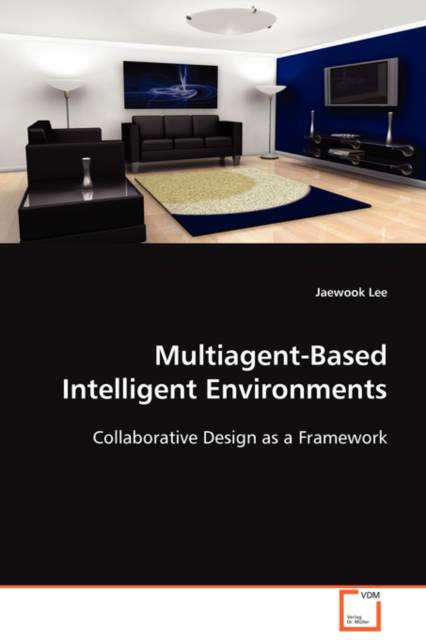
Multiagent-Based Intelligent Environments
Collaborative Design as a Framework
Jaewook Lee
Paperback | Engels
€ 48,45
+ 96 punten
Omschrijving
Intelligent Environments can respond to the changing
needs of their users, activities, and contexts by
automatically adjust key environmental parameters.
However, most of attempts focus on the technical
aspects of physical artifacts instead of the dynamic
interrelationship between the user and the built
environment. Consequently, environmental conflicts
among users, activities, and physical settings
are not completely resolved. This study engages
environmental design concepts to theorize a
framework and propose a more comprehensive model for
building Intelligent Environments. In contrast to
the current approach based on systems theory, the
method here looks to collaborative design. The
proposed model is developed as a team-type
organization of multiple intelligent agents that can
sense immediate changes in its domain of
responsibility and propose corrective measures by
negotiating with other agents to form a collective
response. The theory and framework presented in this
study should be useful to those who have an interest
in the application of computing to the environmental
design fields, including architecture and interior
design.
needs of their users, activities, and contexts by
automatically adjust key environmental parameters.
However, most of attempts focus on the technical
aspects of physical artifacts instead of the dynamic
interrelationship between the user and the built
environment. Consequently, environmental conflicts
among users, activities, and physical settings
are not completely resolved. This study engages
environmental design concepts to theorize a
framework and propose a more comprehensive model for
building Intelligent Environments. In contrast to
the current approach based on systems theory, the
method here looks to collaborative design. The
proposed model is developed as a team-type
organization of multiple intelligent agents that can
sense immediate changes in its domain of
responsibility and propose corrective measures by
negotiating with other agents to form a collective
response. The theory and framework presented in this
study should be useful to those who have an interest
in the application of computing to the environmental
design fields, including architecture and interior
design.
Specificaties
Betrokkenen
- Auteur(s):
- Uitgeverij:
Inhoud
- Aantal bladzijden:
- 116
- Taal:
- Engels
Eigenschappen
- Productcode (EAN):
- 9783639083217
- Verschijningsdatum:
- 07/11/2008
- Uitvoering:
- Paperback
- Formaat:
- Trade paperback (VS)
- Afmetingen:
- 152 mm x 229 mm
- Gewicht:
- 163 g



Alleen bij Standaard Boekhandel
+ 96 punten op je klantenkaart van Standaard Boekhandel
Cadeau

AANGERADEN


Beoordelingen
We publiceren alleen reviews die voldoen aan de voorwaarden voor reviews. Bekijk onze voorwaarden voor reviews.