


- Afhalen na 1 uur in een winkel met voorraad
- Gratis thuislevering in België vanaf € 30
- Ruim aanbod met 7 miljoen producten
- Afhalen na 1 uur in een winkel met voorraad
- Gratis thuislevering in België vanaf € 30
- Ruim aanbod met 7 miljoen producten





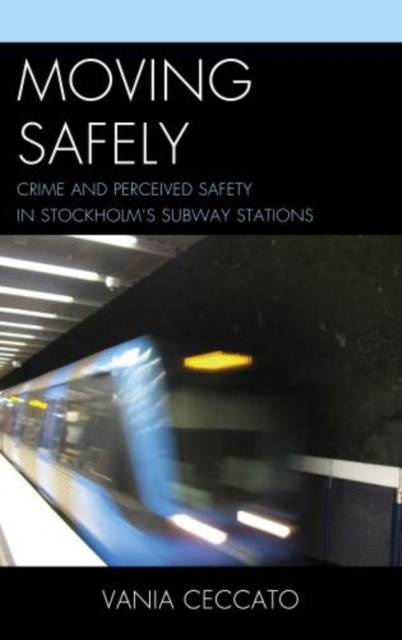
Moving Safely
Crime and Perceived Safety in Stockholm's Subway Stations
Vania Ceccato
Hardcover | Engels
€ 186,95
+ 373 punten
Omschrijving
A sustainable city enables the fulfillment of the mobility needs of its citizens via accessible, reliable and safe transportation systems. Safety is one of many factors influencing the mobility of individuals in urban environments. Moving Safely: Crime and Perceived Safety in Stockholm's Subway Stations aims to provide both theoretical and empirical perspectives on safety conditions at subway stations. The book adopts an approach that is place-centered, looking upon those who travel through the system and who may become a victim of crime. Safety at transportation nodes is not a field for one science only; it demands the combination of cross-disciplinary theories (urban criminology, architecture, geography, transportation and urban planning) as well as integrated methods that are capable of dealing with an ever-increasing volume of data. Adopting a whole journey approach to safety, the book offers suggestions on how to plan safety at subway stations with a variety of passengers' needs. Although these suggestions are not the first ones in the literature, certainly they are new in terms of relying on findings from hypothesis testing and spatial data from a Scandinavian city. Moving Safely is relevant for experts in safety and transportation research, including criminologists, planners, transportation engineers, architects as well as professionals dealing directly with safety interventions.
Specificaties
Betrokkenen
- Auteur(s):
- Uitgeverij:
Inhoud
- Aantal bladzijden:
- 218
- Taal:
- Engels
Eigenschappen
- Productcode (EAN):
- 9780739177600
- Verschijningsdatum:
- 12/09/2013
- Uitvoering:
- Hardcover
- Formaat:
- Genaaid
- Afmetingen:
- 157 mm x 231 mm
- Gewicht:
- 476 g



Alleen bij Standaard Boekhandel
+ 373 punten op je klantenkaart van Standaard Boekhandel
Cadeau

AANGERADEN


Beoordelingen
We publiceren alleen reviews die voldoen aan de voorwaarden voor reviews. Bekijk onze voorwaarden voor reviews.