


- Afhalen na 1 uur in een winkel met voorraad
- Gratis thuislevering in België vanaf € 30
- Ruim aanbod met 7 miljoen producten
- Afhalen na 1 uur in een winkel met voorraad
- Gratis thuislevering in België vanaf € 30
- Ruim aanbod met 7 miljoen producten





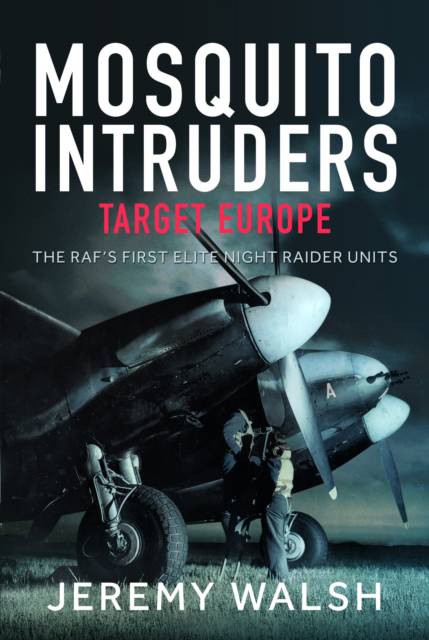
Mosquito Intruders - Target Europe
The Raf's First Elite Night Raider Units
Jeremy Walsh
Hardcover | Engels
€ 34,95
+ 69 punten
Omschrijving
A vivid history of elite RAF Mosquito intruder squadrons and their daring night operations over occupied Europe.
It was only the 'above average' pilots and navigators who were invited to volunteer for what was some of the most challenging, daring and rewarding flying operations of the Second World War. Their role was to take Mosquitos at low level through the night across Europe to loiter near a Luftwaffe airfield to attack and shoot down returning enemy bombers or night fighters.
The Mosquito intruders' story starts during the Battle of Britain, when RAF planners noticed a few German interlopers 'hiding' in the returning bomber streams, so that they could attack landing RAF aircraft. They recognised that this was a tactic the RAF could also employ.
To exploit this concept properly, the RAF needed the right equipment, training programme and airmen. Each would take time to establish. It was not until mid-1943, with the superior performance and capabilities of the iconic de Havilland DH.98 Mosquito FB VI, that the intruders' full impact would at last be felt. The first three intruder squadrons, Nos. 23, 418 and 605, were the elite of the elite. Their 'Battle Honours' demonstrate their contribution to delivering victory over the Axis forces.
Mosquito Intruders - Target Europe uses diaries, first-hand accounts, contemporaneous sources, and official records to take the reader through the development of the intruder concept, their early days equipped initially with the Douglas DB-7 Boston and the Mosquito NF II (Special), to the operations of the first three Mosquito intruder squadrons. These three squadrons defended Malta, supported the invasion of Sicily, assisted No. 617 'Dambusters' Squadron on their famous Dortmund-Ems Canal raid, were the first to attack on D-Day, and worked out how to defeat the V1 flying bombs. They were led from the front, and through example, by larger-than-life fighter aces.
The Mosquito demanded respect and could take punishment. Beautifully balanced, fast and with a powerful punch, for most of the aircrew, it was the aircraft of their dreams. By the end of Mosquito Intruders - Target Europe, you will understand why!
It was only the 'above average' pilots and navigators who were invited to volunteer for what was some of the most challenging, daring and rewarding flying operations of the Second World War. Their role was to take Mosquitos at low level through the night across Europe to loiter near a Luftwaffe airfield to attack and shoot down returning enemy bombers or night fighters.
The Mosquito intruders' story starts during the Battle of Britain, when RAF planners noticed a few German interlopers 'hiding' in the returning bomber streams, so that they could attack landing RAF aircraft. They recognised that this was a tactic the RAF could also employ.
To exploit this concept properly, the RAF needed the right equipment, training programme and airmen. Each would take time to establish. It was not until mid-1943, with the superior performance and capabilities of the iconic de Havilland DH.98 Mosquito FB VI, that the intruders' full impact would at last be felt. The first three intruder squadrons, Nos. 23, 418 and 605, were the elite of the elite. Their 'Battle Honours' demonstrate their contribution to delivering victory over the Axis forces.
Mosquito Intruders - Target Europe uses diaries, first-hand accounts, contemporaneous sources, and official records to take the reader through the development of the intruder concept, their early days equipped initially with the Douglas DB-7 Boston and the Mosquito NF II (Special), to the operations of the first three Mosquito intruder squadrons. These three squadrons defended Malta, supported the invasion of Sicily, assisted No. 617 'Dambusters' Squadron on their famous Dortmund-Ems Canal raid, were the first to attack on D-Day, and worked out how to defeat the V1 flying bombs. They were led from the front, and through example, by larger-than-life fighter aces.
The Mosquito demanded respect and could take punishment. Beautifully balanced, fast and with a powerful punch, for most of the aircrew, it was the aircraft of their dreams. By the end of Mosquito Intruders - Target Europe, you will understand why!
Specificaties
Betrokkenen
- Auteur(s):
- Uitgeverij:
Inhoud
- Aantal bladzijden:
- 272
- Taal:
- Engels
Eigenschappen
- Productcode (EAN):
- 9781036119621
- Verschijningsdatum:
- 30/03/2026
- Uitvoering:
- Hardcover
- Formaat:
- Genaaid
- Afmetingen:
- 154 mm x 236 mm
- Gewicht:
- 521 g


Alleen bij Standaard Boekhandel
+ 69 punten op je klantenkaart van Standaard Boekhandel
Cadeau

AANGERADEN


Beoordelingen
We publiceren alleen reviews die voldoen aan de voorwaarden voor reviews. Bekijk onze voorwaarden voor reviews.