


- Afhalen na 1 uur in een winkel met voorraad
- Gratis thuislevering in België vanaf € 30
- Ruim aanbod met 7 miljoen producten
- Afhalen na 1 uur in een winkel met voorraad
- Gratis thuislevering in België vanaf € 30
- Ruim aanbod met 7 miljoen producten




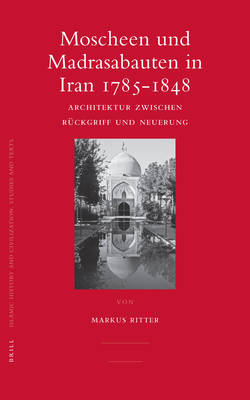
Moscheen Und Madrasabauten in Iran 1785-1848
Architektur Zwischen Rückgriff Und Neuerung
Markus Ritter
€ 657,95
+ 1315 punten
Omschrijving
The book studies late 18th to mid-19th century Iranian architecture in mosques and madrasas, entering a widely unknown architectural period.
The introduction places the buildings as religious and political architecture in the context of the early Qājār monarchy and the rising urban elites. The main part analyses architectural development within a formal typology. Stylistic characteristics are defined, and formal groups are interpreted with regard to patron circles. The remarkable combination of tradition and innovation is discussed as a phenomenon of 18th/19th-century Iran and with a view to general trends of the period.
The thorough catalogue including buildings visited by the author and supplementary material, provides the reader with descriptions, inscription readings, historical data and textual sources, and is illustrated with photographs and plans on 200 plates (16 in colour).
The introduction places the buildings as religious and political architecture in the context of the early Qājār monarchy and the rising urban elites. The main part analyses architectural development within a formal typology. Stylistic characteristics are defined, and formal groups are interpreted with regard to patron circles. The remarkable combination of tradition and innovation is discussed as a phenomenon of 18th/19th-century Iran and with a view to general trends of the period.
The thorough catalogue including buildings visited by the author and supplementary material, provides the reader with descriptions, inscription readings, historical data and textual sources, and is illustrated with photographs and plans on 200 plates (16 in colour).
Specificaties
Betrokkenen
- Auteur(s):
- Uitgeverij:
Inhoud
- Aantal bladzijden:
- 1001
- Taal:
- Duits
- Reeks:
- Reeksnummer:
- nr. 62
Eigenschappen
- Productcode (EAN):
- 9789004144811
- Verschijningsdatum:
- 23/12/2005
- Uitvoering:
- Hardcover
- Formaat:
- Genaaid
- Afmetingen:
- 173 mm x 246 mm
- Gewicht:
- 2177 g


Alleen bij Standaard Boekhandel
+ 1315 punten op je klantenkaart van Standaard Boekhandel
CADEAU


Beoordelingen
We publiceren alleen reviews die voldoen aan de voorwaarden voor reviews. Bekijk onze voorwaarden voor reviews.