


- Afhalen na 1 uur in een winkel met voorraad
- Gratis thuislevering in België vanaf € 30
- Ruim aanbod met 7 miljoen producten
- Afhalen na 1 uur in een winkel met voorraad
- Gratis thuislevering in België vanaf € 30
- Ruim aanbod met 7 miljoen producten





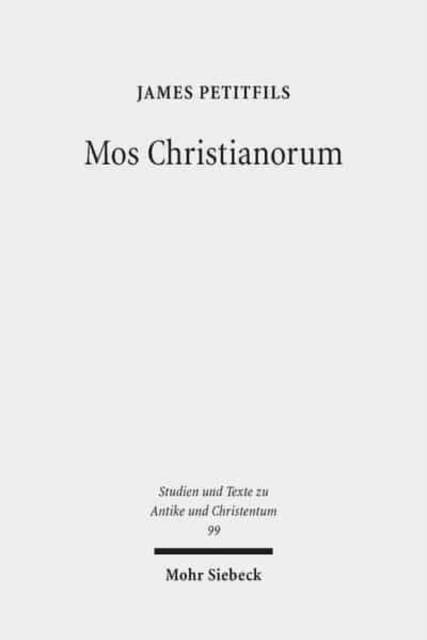
Mos Christianorum
The Roman Discourse of Exemplarity and the Jewish and Christian Language of Leadership
James Petitfils
€ 104,45
+ 208 punten
Omschrijving
The preferred moral curriculum of a Roman education abounded with exemplary stories of Rome's native heroes. To inculcate conceptions of virtuous leadership, politicians and populace alike deployed exempla as rhetorical vehicles of the mos maiorum (way of the ancestors). James Petitfils explores Jewish and Christian participation in this widespread pedagogical practice. After surveying Roman discourse on exemplary leadership, the author consults several texts, written in significantly Romanized environments, celebrating Jewish or Christian ancestral leaders (Josephus' Antiquities 2-4, Philo's Mosis 1-2, 1 Clement, and The Letter of the Churches of Vienne and Lyons ). He highlights their respective appropriation, adaptation, and redeployment of the Roman moral idiom on exemplary leadership in the promotion of self-consciously non-Roman ancestral exempla and languages of leadership.
Specificaties
Betrokkenen
- Auteur(s):
- Uitgeverij:
Inhoud
- Aantal bladzijden:
- 290
- Taal:
- Engels
- Reeks:
- Reeksnummer:
- nr. 99
Eigenschappen
- Productcode (EAN):
- 9783161539046
- Verschijningsdatum:
- 1/11/2016
- Uitvoering:
- Paperback
- Formaat:
- Trade paperback (VS)
- Afmetingen:
- 154 mm x 230 mm
- Gewicht:
- 27 g


Alleen bij Standaard Boekhandel
+ 208 punten op je klantenkaart van Standaard Boekhandel
Cadeau

AANGERADEN


Beoordelingen
We publiceren alleen reviews die voldoen aan de voorwaarden voor reviews. Bekijk onze voorwaarden voor reviews.