



Je cadeautjes zeker op tijd in huis hebben voor de feestdagen? Kom langs in onze winkels en vind het perfecte geschenk!
- Afhalen na 1 uur in een winkel met voorraad
- Gratis thuislevering in België vanaf € 30
- Ruim aanbod met 7 miljoen producten
Je cadeautjes zeker op tijd in huis hebben voor de feestdagen? Kom langs in onze winkels en vind het perfecte geschenk!
- Afhalen na 1 uur in een winkel met voorraad
- Gratis thuislevering in België vanaf € 30
- Ruim aanbod met 7 miljoen producten





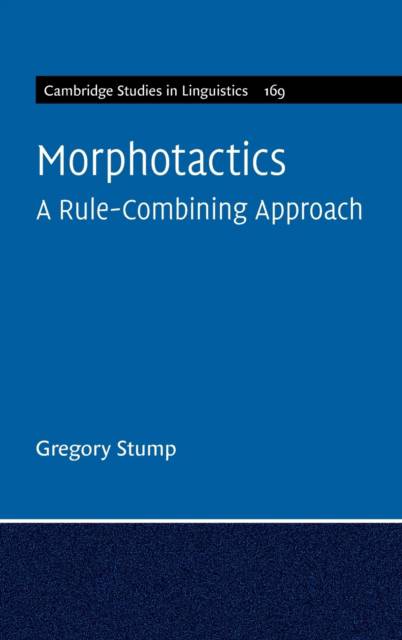
Omschrijving
The study of morphology is central to linguistics, and morphotactics - the general principles by which the parts of a word form are arranged - is essential to the study of morphology. Drawing on evidence from a range of languages, this is a comprehensive and up-to-date account of the principles of morphotactic analysis. Stump proposes that the arrangement of word forms' grammatically significant parts is an expression of the ways in which a language's morphological rules combine with one another to form more specific rules. This rule-combining approach to morphotactics has important implications for the synchronic analysis of both inflectional and derivational morphology, and it provides a solid conceptual platform for understanding both the processing of morphologically complex words and the paths of morphological change. Laying the groundwork for future research on morphotactic analysis, this is essential reading for researchers and graduate students in linguistics, and anyone interested in understanding language structure.
Specificaties
Betrokkenen
- Auteur(s):
- Uitgeverij:
Inhoud
- Aantal bladzijden:
- 454
- Taal:
- Engels
- Reeks:
- Reeksnummer:
- nr. 169
Eigenschappen
- Productcode (EAN):
- 9781009168212
- Verschijningsdatum:
- 8/12/2022
- Uitvoering:
- Hardcover
- Formaat:
- Genaaid
- Afmetingen:
- 152 mm x 229 mm
- Gewicht:
- 771 g


Alleen bij Standaard Boekhandel
+ 426 punten op je klantenkaart van Standaard Boekhandel
CADEAU


Beoordelingen
We publiceren alleen reviews die voldoen aan de voorwaarden voor reviews. Bekijk onze voorwaarden voor reviews.