


- Afhalen na 1 uur in een winkel met voorraad
- Gratis thuislevering in België vanaf € 30
- Ruim aanbod met 7 miljoen producten
- Afhalen na 1 uur in een winkel met voorraad
- Gratis thuislevering in België vanaf € 30
- Ruim aanbod met 7 miljoen producten





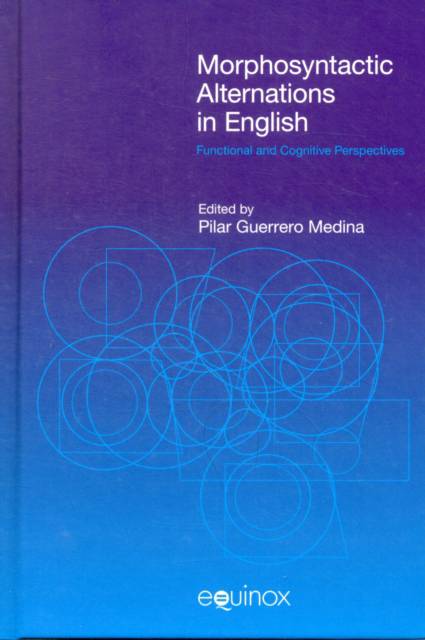
Morphosyntactic Alterations in English
Functional and Cognitive Perspectives
€ 129,45
+ 258 punten
Omschrijving
This volume brings together fourteen papers which explore the discourse-pragmatic, semantic, morphological and syntactic factors involved in English morphosyntactic alternations. The contributors to this volume deal with different types of diathesis alternations -broadly defined by Levin (English Verb Classes and Alternations. A Preliminary Investigation, 1993) as alternations in the expressions of arguments, sometimes accompanied by changes of meaning -i.e. transitivity alternations (such as the causative/inchoative alternation and the conative alternation), alternations involving arguments within the VP (such as the Swarm-alternation, and the dative or benefactive alternations), etc. The volume will also include some contributions dealing more generally with the issues of morphological relatedness and verb-specific alternations within functionalist, cognitive and/or constructionist frameworks. The book features a wide range of theoretical approaches, ranging from functionalist models such as Functional Discourse Grammar or the Cardiff Grammar version of Systemic Functional Linguistics to more cognitively-oriented approaches such as Goldberg's Construction Grammar or Fillmore's Frame Semantics. This attempt to describe morphosyntactic alternations within different contemporary theories -derivational and non-derivational- will hopefully contribute to a better understanding of the linguistic phenomena traditionally subsumed under the rubric of morphosyntactic alternation. The book will be of interest to experienced linguists and researchers of a functionalist, cognitivist or even functional-typological persuasion.
Specificaties
Betrokkenen
- Uitgeverij:
Inhoud
- Aantal bladzijden:
- 388
- Taal:
- Engels
- Reeks:
Eigenschappen
- Productcode (EAN):
- 9781845537449
- Verschijningsdatum:
- 15/09/2011
- Uitvoering:
- Hardcover
- Formaat:
- Ongenaaid / garenloos gebonden
- Afmetingen:
- 157 mm x 236 mm
- Gewicht:
- 725 g

Alleen bij Standaard Boekhandel
+ 258 punten op je klantenkaart van Standaard Boekhandel
Cadeau

AANGERADEN


Beoordelingen
We publiceren alleen reviews die voldoen aan de voorwaarden voor reviews. Bekijk onze voorwaarden voor reviews.