


- Afhalen na 1 uur in een winkel met voorraad
- Gratis thuislevering in België vanaf € 30
- Ruim aanbod met 7 miljoen producten
- Afhalen na 1 uur in een winkel met voorraad
- Gratis thuislevering in België vanaf € 30
- Ruim aanbod met 7 miljoen producten





€ 124,45
+ 248 punten
Omschrijving
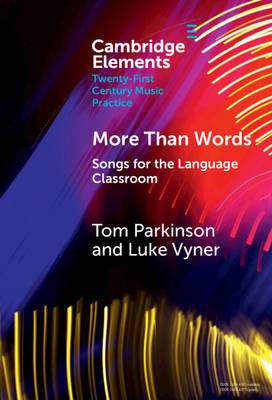
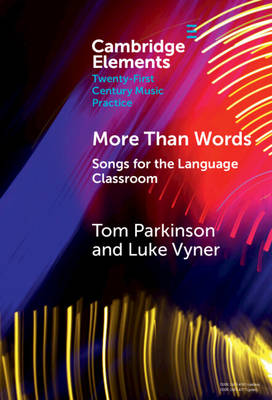
English language teachers have long recognised pop songs' potential for engaging students and establishing positive classroom environments conducive to language learning. Educational publishers increasingly incorporate music into their coursebooks, including specially commissioned 'ELT songs', whose lyrics feature aspects of target language. This Element explores the phenomenon of ELT songs from the authors' insider perspective as songwriters. It considers the relationship between music and lyrics in songs, what this means for using songs in the language classroom, the historical developments through which ELT songs emerged, and the contexts in which they are written, listened to, and made. Through literature review and reflection, the authors derive a framework of twelve criteria and ten dilemmas to guide ELT songwriting, before applying it in an analysis of their songs and songwriting process. The final section proposes a model for multidisciplinary collaboration between songwriters and non-musician collaborators including authors, teachers, and publishers.
Specificaties
Betrokkenen
- Auteur(s):
- Uitgeverij:
Inhoud
- Aantal bladzijden:
- 92
- Taal:
- Engels
- Reeks:
Eigenschappen
- Productcode (EAN):
- 9781009662314
- Verschijningsdatum:
- 20/03/2025
- Uitvoering:
- Hardcover
- Formaat:
- Genaaid
- Afmetingen:
- 152 mm x 229 mm
- Gewicht:
- 299 g


Alleen bij Standaard Boekhandel
+ 248 punten op je klantenkaart van Standaard Boekhandel
Cadeau

AANGERADEN


Beoordelingen
We publiceren alleen reviews die voldoen aan de voorwaarden voor reviews. Bekijk onze voorwaarden voor reviews.