


- Afhalen na 1 uur in een winkel met voorraad
- Gratis thuislevering in België vanaf € 30
- Ruim aanbod met 7 miljoen producten
- Afhalen na 1 uur in een winkel met voorraad
- Gratis thuislevering in België vanaf € 30
- Ruim aanbod met 7 miljoen producten





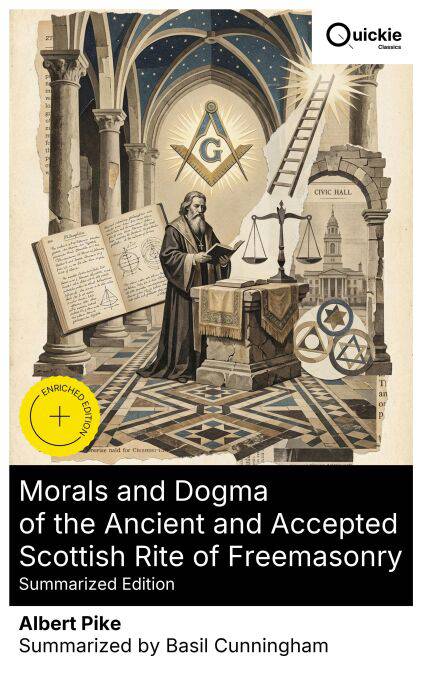
Morals and Dogma of the Ancient and Accepted Scottish Rite of Freemasonry (Summarized Edition) E-BOOK
Enriched edition. A philosophical exploration of esoteric Freemason rituals and moral teachings
Albert Pike
E-book | Engels
€ 0,49
Omschrijving
First published in 1871, Morals and Dogma offers philosophical lectures aligned with the first thirty-two degrees of the Ancient and Accepted Scottish Rite. Pike fuses classical ethics, biblical exegesis, Kabbalah, Hermetic lore, and civic republicanism into a syncretic tapestry, in ornate Victorian prose dense with citation. Born of nineteenth‑century comparative religion and esoteric scholarship, it is less a ritual manual than a sustained meditation on symbolism, virtue, and the obligations of citizenship. Albert Pike (1809–1891), an American lawyer, editor, and soldier, served as Sovereign Grand Commander of the Southern Jurisdiction. A formidable autodidact and polyglot, he drew on French Masonic treatises, Orientalist philology, and classical sources to shape these lectures. His legal cast of mind, poetic temperament, and role in revising Rite rituals converge in an attempt to situate Freemasonry within a universal history of symbols and moral law. This volume rewards students of intellectual history, religious studies, and moral philosophy, as well as Masons seeking context for the Rite's symbolism. Approach it as demanding nineteenth‑century thought: read slowly, test Pike's sources, and favor annotated editions. For patient, critical readers, Morals and Dogma yields a challenging, panoramic education in symbolism and ethics.
Quickie Classics summarizes timeless works with precision, preserving the author's voice and keeping the prose clear, fast, and readable—distilled, never diluted. Enriched Edition extras: Introduction · Synopsis · Historical Context · Brief Analysis · 4 Reflection Q&As · Editorial Footnotes.
Quickie Classics summarizes timeless works with precision, preserving the author's voice and keeping the prose clear, fast, and readable—distilled, never diluted. Enriched Edition extras: Introduction · Synopsis · Historical Context · Brief Analysis · 4 Reflection Q&As · Editorial Footnotes.
Specificaties
Betrokkenen
- Auteur(s):
- Uitgeverij:
Inhoud
- Aantal bladzijden:
- 254
- Taal:
- Engels
Eigenschappen
- Productcode (EAN):
- 8596547892410
- Verschijningsdatum:
- 2/04/2026
- Uitvoering:
- E-book
- Beveiligd met:
- Digital watermarking
- Formaat:
- ePub


Alleen bij Standaard Boekhandel
Cadeau

AANGERADEN


Beoordelingen
We publiceren alleen reviews die voldoen aan de voorwaarden voor reviews. Bekijk onze voorwaarden voor reviews.