


- Afhalen na 1 uur in een winkel met voorraad
- Gratis thuislevering in België vanaf € 30
- Ruim aanbod met 7 miljoen producten
- Afhalen na 1 uur in een winkel met voorraad
- Gratis thuislevering in België vanaf € 30
- Ruim aanbod met 7 miljoen producten





€ 153,95
+ 307 punten
Omschrijving
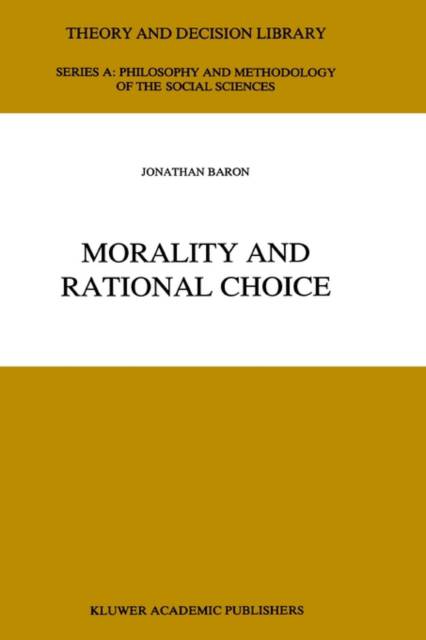
Public controversies - such as those about the distribution of goods between rich and poor, trade and population policies, allocation of medical resources, and the tradeoff between environment al protection and economic efficiency - often hinge on fundamental views about how we ought to make decisions tImt affect each other, that is, what principles we ought to follow. Efforts to find an acceptable public philosophy, a set of such principles on which people might agree, have foundered because of dis agreement among philosophers and others who are concerned with such issues. One view, which I shall develop and defend here, holds that decisions that affect others should be made according to an overall evaluation of the consequences of each option. This consequentialist view is opposed by a variety of alternatives, but many of the alternatives have in COlllmon a basis in moral intuition. To take a simple example, consequentialism holds that, other things equal, if we have decided that it is better to let a terminally ill patient die than to prolong her agony by keeping her alive, then we ought to kill her.
Specificaties
Betrokkenen
- Auteur(s):
- Uitgeverij:
Inhoud
- Aantal bladzijden:
- 208
- Taal:
- Engels
- Reeks:
- Reeksnummer:
- nr. 18
Eigenschappen
- Productcode (EAN):
- 9780792322764
- Verschijningsdatum:
- 31/05/1993
- Uitvoering:
- Hardcover
- Formaat:
- Genaaid
- Afmetingen:
- 156 mm x 234 mm
- Gewicht:
- 485 g


Alleen bij Standaard Boekhandel
+ 307 punten op je klantenkaart van Standaard Boekhandel
Cadeau

AANGERADEN


Beoordelingen
We publiceren alleen reviews die voldoen aan de voorwaarden voor reviews. Bekijk onze voorwaarden voor reviews.