


- Afhalen na 1 uur in een winkel met voorraad
- Gratis thuislevering in België vanaf € 30
- Ruim aanbod met 7 miljoen producten
- Afhalen na 1 uur in een winkel met voorraad
- Gratis thuislevering in België vanaf € 30
- Ruim aanbod met 7 miljoen producten





€ 127,20
+ 254 punten
Omschrijving
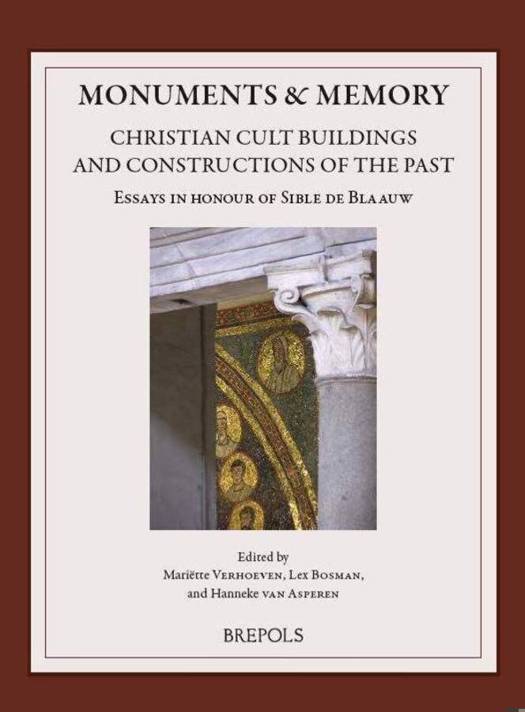
This volume honours Sible de Blaauw on the occasion of his retirement from Radboud University. It is above all a tribute to an influential and respected voice in the field of early Christian art and architecture. Thirty-one authors have sought to provide their own unique answer to the question of how Christian cult buildings have played a role in cultural memory in different periods and in various geographical and cultural contexts. From its very onset, this publication was envisioned as a parallel to De Blaauw's own research interests: Rome and its monuments, early Christianity, Christian religious heritage, liturgy and architecture, continuity of tradition, and memory. The contributions have been arranged according to three sections: Monuments - Places - Decoration & Liturgical Furnishing. Every essay addresses the memorial potential of Christian buildings, of their location, or of the accoutre-ment, whether or not still in situ. Not surprisingly, Rome reappears frequently in all sections, with Rome's churches receiving special attention. Together the essays cover a period from Late Antiquity to modern times, from Helena to Gerhard Richter, from late antique poets to a Ravennesque mosaic in the 1930s. Thus, this volume assumes the diachronic nature that characterizes De Blaauw's own scholarship. The leitmotifs of Christian cult and material and immaterial constructions of the past tie together the sections as well as the book as a whole. Nevertheless, the main binding element between the essays is their authors' fondness and appreciation of Sible de Blaauw.
Specificaties
Betrokkenen
- Auteur(s):
- Uitgeverij:
Inhoud
- Aantal bladzijden:
- 405
- Taal:
- Engels, Duits
- Reeks:
- Reeksnummer:
- nr. 3
Eigenschappen
- Productcode (EAN):
- 9782503569734
- Verschijningsdatum:
- 9/11/2016
- Uitvoering:
- Paperback
- Formaat:
- Trade paperback (VS)
- Afmetingen:
- 218 mm x 279 mm
- Gewicht:
- 1746 g


Alleen bij Standaard Boekhandel
+ 254 punten op je klantenkaart van Standaard Boekhandel
CADEAU

AANGERADEN


Beoordelingen
We publiceren alleen reviews die voldoen aan de voorwaarden voor reviews. Bekijk onze voorwaarden voor reviews.