


- Afhalen na 1 uur in een winkel met voorraad
- Gratis thuislevering in België vanaf € 30
- Ruim aanbod met 7 miljoen producten
- Afhalen na 1 uur in een winkel met voorraad
- Gratis thuislevering in België vanaf € 30
- Ruim aanbod met 7 miljoen producten





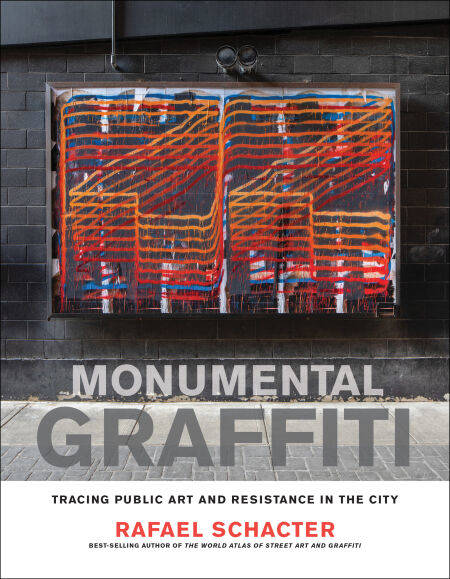
Monumental Graffiti E-BOOK
Tracing Public Art and Resistance in the City
Rafael Schacter
E-book | Engels
€ 39,38
+ 39 punten
Uitvoering
Omschrijving
What graffiti says about contemporary society, and why it demands our urgent attention as a form of civic expression.
What is graffiti—vandalism, ornament, art? What if, rather than any of those things, we thought of graffiti as a monument? How would that change our understanding of graffiti, and, in turn, our understanding of monument? In Monumental Graffiti, curator and anthropologist Rafael Schacter focuses on the material, communicative, and contextual aspects of these two forms of material culture to provide a timely perspective on public art, citizenship, and the city today. He applies monument as a lens to understand graffiti and graffiti as a lens to comprehend monument, challenging us to consider what the appropriate monument for our contemporary world could be.
Monumental Graffiti unpacks today’s iconoclastic moment, showing us why graffiti demands our urgent attention as a form of expression that challenges power structures by questioning whose voices are included in—and whose are excluded from—public space. Written from twenty years of embedded research on graffiti, the book includes works from graffiti writers such as 10Foot, Delta, Egs, Honet, Mosa, Petro, Revok, and Wombat, alongside those of artists such as Francis Alÿs, Jeremy Deller, Thomas Hirschhorn, Jenny Holzer, Klara Liden, Gordon Matta-Clark, William Pope.L, Cy Twombly, and many more.
Richly illustrated, this study of graffiti as monument and monument as graffiti is as fascinating as it is ethnographically expansive.
What is graffiti—vandalism, ornament, art? What if, rather than any of those things, we thought of graffiti as a monument? How would that change our understanding of graffiti, and, in turn, our understanding of monument? In Monumental Graffiti, curator and anthropologist Rafael Schacter focuses on the material, communicative, and contextual aspects of these two forms of material culture to provide a timely perspective on public art, citizenship, and the city today. He applies monument as a lens to understand graffiti and graffiti as a lens to comprehend monument, challenging us to consider what the appropriate monument for our contemporary world could be.
Monumental Graffiti unpacks today’s iconoclastic moment, showing us why graffiti demands our urgent attention as a form of expression that challenges power structures by questioning whose voices are included in—and whose are excluded from—public space. Written from twenty years of embedded research on graffiti, the book includes works from graffiti writers such as 10Foot, Delta, Egs, Honet, Mosa, Petro, Revok, and Wombat, alongside those of artists such as Francis Alÿs, Jeremy Deller, Thomas Hirschhorn, Jenny Holzer, Klara Liden, Gordon Matta-Clark, William Pope.L, Cy Twombly, and many more.
Richly illustrated, this study of graffiti as monument and monument as graffiti is as fascinating as it is ethnographically expansive.
Specificaties
Betrokkenen
- Auteur(s):
- Uitgeverij:
Inhoud
- Aantal bladzijden:
- 400
- Taal:
- Engels
Eigenschappen
- Productcode (EAN):
- 9780262379793
- Verschijningsdatum:
- 30/09/2024
- Uitvoering:
- E-book
- Beveiligd met:
- Adobe DRM
- Formaat:
- ePub


Alleen bij Standaard Boekhandel
+ 39 punten op je klantenkaart van Standaard Boekhandel
Cadeau

AANGERADEN


Beoordelingen
We publiceren alleen reviews die voldoen aan de voorwaarden voor reviews. Bekijk onze voorwaarden voor reviews.