


- Afhalen na 1 uur in een winkel met voorraad
- Gratis thuislevering in België vanaf € 30
- Ruim aanbod met 7 miljoen producten
- Afhalen na 1 uur in een winkel met voorraad
- Gratis thuislevering in België vanaf € 30
- Ruim aanbod met 7 miljoen producten





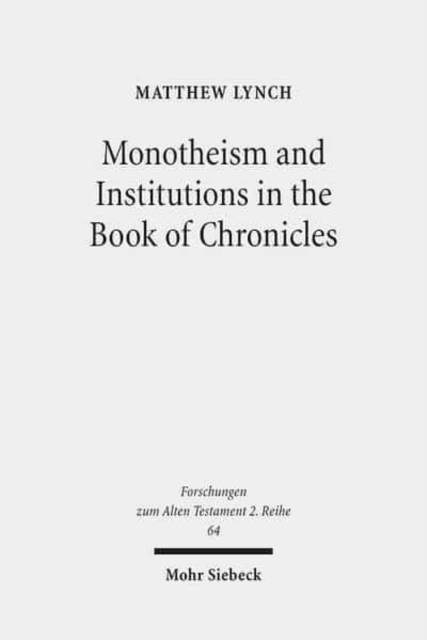
Monotheism and Institutions in the Book of Chronicles
Temple, Priesthood, and Kingship in Post-Exilic Perspective. Studies of the Sofja Kovalevskaja Research Group on Early Jewish Monotheism. Vol. I
Matthew Lynch
€ 109,45
+ 218 punten
Omschrijving
Matthew Lynch examines ways that the one God became known and experienced through institutions according to the book of Chronicles. Chronicles recasts Israel's earlier histories from the vantage point of vigorous commitments to the temple and its supporting institutions (the priesthood and royal house), and draws out the numerous ways that those institutions mediate divine power and inspire national unity. By understanding and participating in the reestablishment of these institutions, Chronicles suggests that post-exilic Judeans could reconnect to the powerful God of the past despite the appallingly impoverished state of post-exilic life. However, Chronicles contends that God was not beholden by those participating in the temple system. As such, it constitutes a via media between two regnant perspectives on the relationship between biblical monotheism and particularism.
Specificaties
Betrokkenen
- Auteur(s):
- Uitgeverij:
Inhoud
- Aantal bladzijden:
- 307
- Taal:
- Engels
- Reeks:
Eigenschappen
- Productcode (EAN):
- 9783161521119
- Verschijningsdatum:
- 1/03/2014
- Uitvoering:
- Paperback
- Formaat:
- Trade paperback (VS)
- Afmetingen:
- 155 mm x 231 mm
- Gewicht:
- 484 g


Alleen bij Standaard Boekhandel
+ 218 punten op je klantenkaart van Standaard Boekhandel
AANGERADEN


Beoordelingen
We publiceren alleen reviews die voldoen aan de voorwaarden voor reviews. Bekijk onze voorwaarden voor reviews.