


- Afhalen na 1 uur in een winkel met voorraad
- Gratis thuislevering in België vanaf € 30
- Ruim aanbod met 7 miljoen producten
- Afhalen na 1 uur in een winkel met voorraad
- Gratis thuislevering in België vanaf € 30
- Ruim aanbod met 7 miljoen producten





€ 34,95
+ 69 punten
Omschrijving
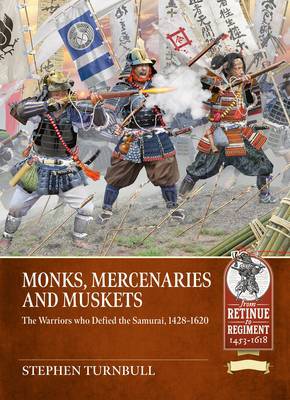
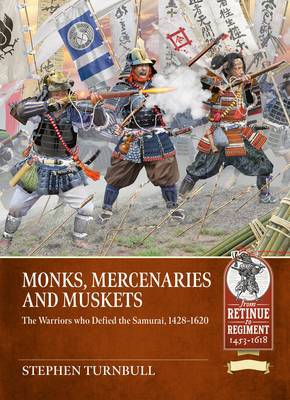
Monks, Mercenaries and Muskets chronicles a series of little-known campaigns where armies of warrior monks, mercenaries, and fanatical Buddhist confederates, who had gained early expertise with firearms, challenged Japan's elite samurai over nearly two centuries.
The samurai, who evolved over many centuries into a unique military class, were never Japan's only warriors. Several alternative groups existed, some of whom fought under the banner of a sacred three-legged crow and cherished legends of holy men appearing in the sky or riding into battle on the backs of giant octopuses. Yet whatever fantasies they embraced off the battlefield, in the mundane reality of Japanese warfare, these warriors were among the first to deploy firearms in anger and were almost certainly the first to use them effectively. Some had been ordained as Buddhist monks, others served as mercenaries, and when not fighting each other, these alternative armies challenged the evolution of the samurai. For over a century and a half, anti-samurai entities like these fought against some of the most prominent figures in Japanese history, opposing the top-down hierarchy of daimyo rule in favour of a more egalitarian system resembling republicanism, although some of these organisations grew as authoritarian as the daimyo they opposed. The overwhelming force of Toyotomi Hideyoshi finally suppressed them in the 1580s, but by then, they had almost altered the course of Japanese history. Monks, Mercenaries and Muskets tells their story for the first time. Drawing on material never before translated from Japanese and richly illustrated in both colour and black and white, this is a groundbreaking account of a unique military phenomenon.
The samurai, who evolved over many centuries into a unique military class, were never Japan's only warriors. Several alternative groups existed, some of whom fought under the banner of a sacred three-legged crow and cherished legends of holy men appearing in the sky or riding into battle on the backs of giant octopuses. Yet whatever fantasies they embraced off the battlefield, in the mundane reality of Japanese warfare, these warriors were among the first to deploy firearms in anger and were almost certainly the first to use them effectively. Some had been ordained as Buddhist monks, others served as mercenaries, and when not fighting each other, these alternative armies challenged the evolution of the samurai. For over a century and a half, anti-samurai entities like these fought against some of the most prominent figures in Japanese history, opposing the top-down hierarchy of daimyo rule in favour of a more egalitarian system resembling republicanism, although some of these organisations grew as authoritarian as the daimyo they opposed. The overwhelming force of Toyotomi Hideyoshi finally suppressed them in the 1580s, but by then, they had almost altered the course of Japanese history. Monks, Mercenaries and Muskets tells their story for the first time. Drawing on material never before translated from Japanese and richly illustrated in both colour and black and white, this is a groundbreaking account of a unique military phenomenon.
Specificaties
Betrokkenen
- Auteur(s):
- Uitgeverij:
Inhoud
- Aantal bladzijden:
- 200
- Taal:
- Engels
- Reeks:
Eigenschappen
- Productcode (EAN):
- 9781806722709
- Verschijningsdatum:
- 15/11/2026
- Uitvoering:
- Paperback
- Formaat:
- Trade paperback (VS)
- Afmetingen:
- 180 mm x 249 mm


Alleen bij Standaard Boekhandel
+ 69 punten op je klantenkaart van Standaard Boekhandel
Cadeau

AANGERADEN


Beoordelingen
We publiceren alleen reviews die voldoen aan de voorwaarden voor reviews. Bekijk onze voorwaarden voor reviews.